

Deciding when to use vitamin c serum day or night is a frequent point of confusion for those building a refined skincare regimen. While many enthusiasts assume that potent active ingredients should be reserved for nighttime repair, this particular antioxidant powerhouse is uniquely suited for the morning.
Integrating this vitamin serum into your early routine provides a vital shield against the environmental stressors you encounter throughout the day. By understanding the chemical nature of L-ascorbic acid and its interaction with external elements, you can better optimize your skin care results and ensure your complexion remains radiant and protected.
The Biological Case for Morning Application
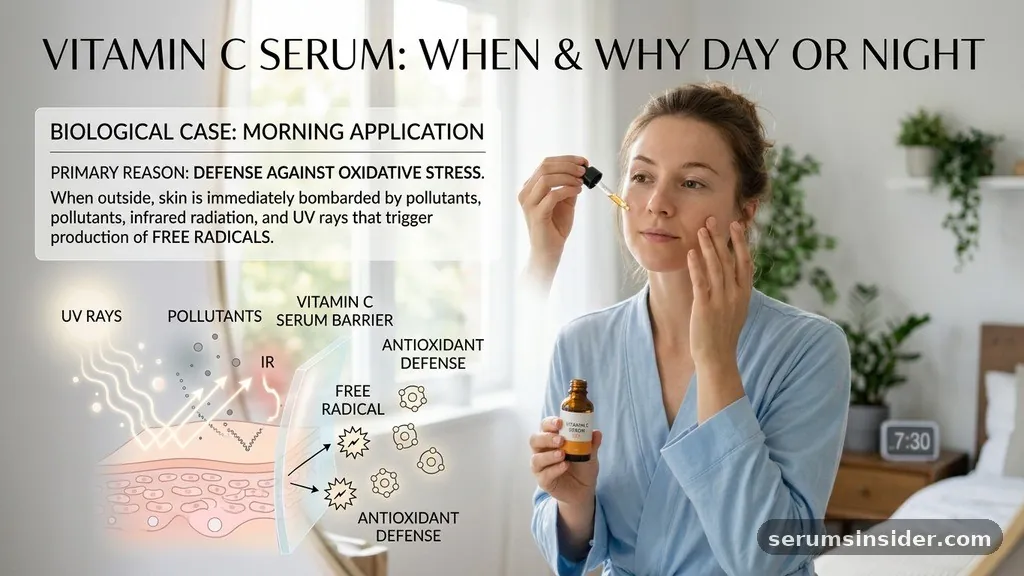
The primary reason dermatologists and skincare experts recommend applying a vitamin C serum in the morning is its function as a first line of defense against oxidative stress. When you step outside, your skin is immediately bombarded by pollutants, infrared radiation, and UV rays that trigger the production of free radicals.
These unstable molecules damage cellular structures, leading to premature aging, hyperpigmentation, and loss of skin elasticity. By applying the product during your morning routine, you effectively saturate your skin with antioxidants that neutralize these unstable molecules before they can cause visible harm.
Think of your vitamin skin treatment as a biological bodyguard. Because the serum remains active on the skin for several hours, it provides consistent coverage during the peak hours of sunlight exposure. While this does not replace the need for SPF, it acts as a secondary layer of protection that bolsters the efficacy of your sunscreen.
Research indicates that when used in conjunction with a broad-spectrum sunblock, these serums significantly reduce the amount of sunburn-inducing damage compared to using sunscreen alone. Therefore, the morning is the most logical time to harness these benefits for long-term health.
Understanding the Role of L-Ascorbic Acid
Not all versions of this nutrient are created equal, and the specific form you choose influences how you incorporate it into your regimen. The gold standard is L-ascorbic acid, which is the most researched and potent form of the ingredient. However, it is also notoriously unstable and sensitive to light and air.
If you leave a bottle open or expose it to extreme temperature fluctuations, it can oxidize—turning a brownish color—and lose its potency. This is precisely why using it in the morning is advantageous; you are applying a fresh, active dose to your skin when it is cleanest and most receptive.
Beyond its antioxidant capabilities, the acid plays a critical role in the synthesis of collagen. Collagen is the structural protein that keeps skin firm and bouncy. By consistently applying this serum, you encourage the body to maintain its structural integrity, which helps to soften fine lines and improve overall texture.
Because the synthesis process is continuous, there is no technical harm in using it at night, but you lose the environmental defense factor. To maximize the value of your products, prioritizing the morning window ensures you gain both the structural support and the external shielding necessary for a healthy complexion.
Integrating Vitamin C into Your Skincare Routine
When building your care routine, the order of operations is essential to ensure maximum absorption. A standard rule of thumb is to apply products from the thinnest consistency to the thickest. Typically, your serum should be applied after cleansing and toning but before your moisturizer and sunscreen.
If you apply it after a heavy cream, the formula may struggle to penetrate the lipid barrier of your skin, rendering it less effective. If you are curious about the technical nuances of how these ingredients penetrate the dermal layers, you can read more at the American Academy of Dermatology for authoritative insights on skin health.
The Layering Process
- Cleansing: Start with a gentle cleanser to remove overnight impurities.
- Toning: Use a pH-balancing toner to prepare the skin.
- Application: Apply 3-5 drops of your vitamin serum to dry skin.
- Wait: Allow the product to absorb for 60 seconds before moving to the next step.
- Moisturizing: Lock in hydration with a lightweight moisturizer.
- Final Step: Always finish with a high-SPF sunscreen to ensure complete protection.
Comparing Day versus Night Usage
Many users wonder if they should use the product twice a day. While this might seem like a way to double the benefits, it is generally unnecessary and can lead to irritation.
The skin has a limited capacity for absorption, and once the receptors are saturated, extra product simply sits on the surface. Furthermore, because the acid is acidic, frequent application might disrupt the skin’s natural moisture barrier, leading to redness or sensitivity.
| Time of Day | Primary Goal | Recommended Ingredients |
|---|---|---|
| Morning | Environmental Protection | Vitamin C, Antioxidants, SPF |
| Night | Cellular Repair | Retinoids, Peptides, Acids |
As shown in the table above, the night is better reserved for restorative ingredients like retinoids or exfoliating acids that encourage cell turnover while you sleep. By segmenting your routine—using antioxidants in the morning and repair agents at night—you provide your skin with a balanced environment that addresses both prevention and correction.
Addressing Potential Sensitivity
If your skin is particularly sensitive, you might find that high-concentration formulas cause mild stinging or redness. This is a common reaction to the low pH of L-ascorbic acid. If you experience this, do not feel discouraged; you can still reap the benefits by adjusting your application technique.
One effective method is to apply the serum to slightly damp skin, which dilutes the concentration slightly without compromising its efficacy. Alternatively, you can mix a few drops into your moisturizer to buffer the intensity.
Another option for those with reactive skin is to look for derivative forms of the ingredient, such as magnesium ascorbyl phosphate or tetrahexyldecyl ascorbate. These derivatives are more stable and less acidic than pure L-ascorbic acid, making them much gentler on the skin.
While they may take slightly longer to show visible results, they allow you to maintain a consistent day routine without the risk of irritation. Remember that consistency is more important than potency when it comes to long-term skin health.
Topical Gaps: Managing Oxidative Stress
A frequent question that arises is whether an antioxidant serum can actually reverse damage that has already occurred. While the primary function is preventative, these serums do have a corrective component.
Through the inhibition of tyrosinase, the enzyme responsible for melanin production, these products help to fade dark spots and even out skin tone over time. This dual-action approach—preventing new damage while simultaneously brightening existing discoloration—is what makes this ingredient a staple in professional-grade regimens.
It is also important to note that environmental oxidative stress is not limited to UV rays. Blue light from digital devices and particulate matter from urban pollution also contribute to free radical formation.
Because these stressors are present even when you are indoors or during cloudy days, wearing your serum daily is a best practice. By maintaining a steady level of the nutrient in your skin, you create a reservoir of protection that works around the clock, even if you only apply it once during your morning step.
Frequently Asked Questions
Can I use vitamin C with retinol?
It is generally advised to use them at different times of the day to avoid irritation. Use your vitamin C serum in the morning for antioxidant protection and save your retinol for the evening to focus on skin cell turnover and anti-aging repair.
Does it make my skin more sensitive to the sun?
No, it does not. In fact, it provides extra protection against sun damage. However, you must always wear sunscreen, as the serum is not a replacement for SPF. Sunscreen is the most critical part of preventing further UV-related skin damage.
How long does a bottle usually stay effective?
Most serums remain potent for about three to six months after opening. If the liquid turns dark orange or brown, it has oxidized and lost its effectiveness. Store your bottle in a cool, dark place, such as a drawer or cabinet, to extend its shelf life.
Can I apply moisturizer immediately after?
Yes, you should apply your moisturizer after the serum has fully absorbed. Waiting about one minute ensures the serum has penetrated the skin, allowing you to layer your subsequent products without diluting the active ingredients or causing pilling on the skin’s surface.
In summary, the most effective time to leverage a vitamin C serum is during your morning skincare routine. By acting as a shield against the environmental insults of the day, it preserves your complexion’s health and vitality.
Whether you are aiming to brighten your tone, stimulate collagen, or simply protect your skin from the rigors of modern life, this one simple addition can transform your daily habits into a high-performance regimen. Stick to a consistent schedule, pair it with proper sun protection, and you will see the cumulative advantages of this powerful antioxidant over time.