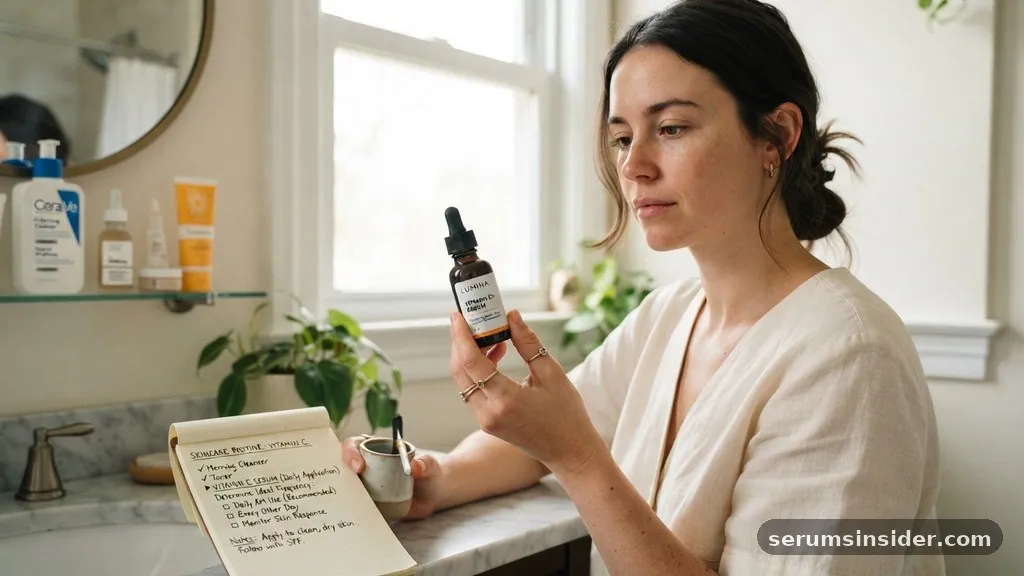
Establishing a consistent rhythm for your skincare routine is the hallmark of achieving a radiant, even complexion. Many enthusiasts find themselves asking how often should you use vitamin c serum to maximize its potent brightening and protective capabilities without triggering unwanted irritation.
Because this active ingredient is highly effective at neutralizing environmental damage, finding the right frequency is essential for long-term skin health. While daily application is generally considered the gold standard for most skin types, the nuance lies in your specific skin sensitivity, the concentration of the formula, and how it interacts with other products in your cabinet.
Determining the Ideal Frequency for Daily Application

For the vast majority of individuals, the answer to how often should you use vitamin c serum is once daily, ideally in the morning. This timing is strategic because the primary function of this ingredient is to provide robust antioxidant protection against the daily onslaught of environmental stressors.
Throughout the day, your skin is exposed to pollutants, infrared radiation, and UV light, all of which contribute to the formation of free radicals. By applying your serum in the morning, you create a defensive barrier that neutralizes these reactive molecules before they can degrade collagen or cause hyperpigmentation.
If you are just beginning to incorporate this active into your care routine, you might consider starting with a lower frequency. Some people experience mild tingling or redness when they first introduce a potent acid-based serum. In these instances, using the product every other day for the first two weeks allows your skin barrier to acclimate.
Once your skin demonstrates tolerance, you can safely transition to a daily application. It is important to remember that consistency is more important than intensity; using a lower concentration regularly will yield far better results over time than using a high-potency formula sporadically.
Why Morning Application is Preferred Over Night
While some active ingredients, such as retinoids, are strictly reserved for the night, vitamin C is widely regarded as a daytime staple. The primary reason for this preference is the synergy between the serum and your sunscreen.
When you apply the serum in the morning, it works in tandem with your SPF to mitigate the damage that might slip through your sun protection. Scientific research indicates that antioxidants can boost the efficacy of sunscreen by reducing oxidative stress caused by UV exposure.
However, choosing to use the product at night is not necessarily “wrong.” Some users prefer to save their serum morning slot for other actives like niacinamide or peptides, opting to use their vitamin C before bed.
If you choose to use it at night, ensure you are not layering it with other potentially irritating acids like AHAs or BHAs, which could compromise the stability of the vitamin C and lead to skin sensitivity. Ultimately, the goal is to ensure the product is on your skin during the hours when you are most likely to encounter environmental pollutants.
Navigating Sensitivity and Concentration Levels
The concentration of L-ascorbic acid—the most common and potent form of vitamin C—ranges significantly across products. A serum with a 5% concentration is much gentler than one containing 15% or 20%. If you have sensitive skin, you should not feel pressured to use a high-percentage product every single day.
Instead, focus on finding a formulation that your skin can handle comfortably. If you notice persistent flaking, stinging, or redness, these are clear signs that you are overusing the product or that the concentration is too high for your current barrier health.
To maintain optimal health, monitor your skin’s reaction closely. If you find that daily use is too much, scale back to three or four times a week. You can also look for derivatives like sodium ascorbyl phosphate, which are generally more stable and less irritating than pure L-ascorbic acid.
These alternatives are excellent for those who want the benefits of the antioxidant but struggle with the acidity of traditional formulas. Always listen to your skin; if it feels tight or inflamed, give it a rest day.
Strategic Layering and Product Compatibility
One of the biggest mistakes users make is failing to understand how vitamin C interacts with other layers of their skincare. Because it is an acid, its pH is typically very low, which is necessary for it to penetrate the skin effectively.
When you use vitamin C, you should apply it as the first step after cleansing, ideally on dry skin. Applying it to damp skin can sometimes cause a stinging sensation because water can increase the penetration of the acid, potentially leading to unwanted irritation.
Furthermore, you must be careful with what you apply after the serum. Many people wonder if they should wait before applying their moisturizer or sunscreen. Waiting approximately one to three minutes allows the serum to fully absorb.
For more information on how to properly integrate active ingredients, you can consult resources like the American Academy of Dermatology, which provides evidence-based guidance on maintaining a healthy skin care regimen. Avoiding “pilling”—where the product balls up on the skin—is often a matter of giving each layer enough time to sink in before moving to the next.
Common Mistakes to Avoid in Your Routine
Even if you know how often should you use vitamin c serum, you can still undermine your results if you store or apply the product incorrectly. Vitamin C is notoriously unstable and sensitive to light, air, and heat.
If your bottle has turned from a clear or light straw color to a dark orange or brown, it has likely oxidized and lost its efficacy. When the product reaches this stage, it no longer provides the same level of antioxidant protection and should be discarded.
Key Considerations for Serum Efficacy
- Always store your serum in a cool, dark place to prevent premature oxidation.
- Ensure the dropper or pump is tightly sealed after every use to minimize air exposure.
- Apply only a few drops; a little goes a long way, and over-application does not equate to better results.
- Avoid layering your serum with high-strength retinoids at the exact same time unless your skin is highly tolerant.
- Check the expiration date; most formulations are only at peak potency for three to six months after opening.
Comparing Usage Patterns for Different Skin Goals
Different skin concerns require different approaches to frequency. Someone looking to brighten dark spots may benefit from a more aggressive, daily regimen, while someone focusing on general preventative care might find that every other day is sufficient. The following table provides a breakdown of how frequency might shift based on your specific skin profile and the intensity of the product being used.
| Skin Type | Recommended Frequency | Product Concentration |
|---|---|---|
| Sensitive/Reactive | 2-3 times per week | 5% – 10% (Derivatives) |
| Balanced/Normal | Daily (Morning) | 10% – 15% |
| Oily/Resilient | Daily (Morning) | 15% – 20% |
| Mature/Dry | Daily (Morning) | 10% – 15% (with peptides) |
By adjusting your approach based on these variables, you ensure that you are getting the most out of your product without causing unnecessary stress to your skin barrier. Remember that the goal of using a vitamin serum is to support the skin’s natural recovery process and enhance its luminosity, not to force it into a state of inflammation.
Frequently Asked Questions
Is it okay to use vitamin C serum every day?
Yes, for most people, daily application is ideal. It provides consistent antioxidant support throughout the day. However, if you have sensitive skin, start by using it every other day to allow your skin to adjust to the acidity of the formula before increasing the frequency.
What should you not mix with vitamin C?
You should generally avoid mixing high-strength vitamin C with products containing retinol or AHAs/BHAs (like glycolic or salicylic acid) in the same application. These combinations can cause significant irritation, redness, and peeling, as the different pH levels and active properties can conflict on the skin’s surface.
What are the mistakes while using vitamin C serum?
Common mistakes include failing to use sunscreen afterward, which renders the protection ineffective, and allowing the product to oxidize by leaving the bottle open. Another error is applying it to wet skin or immediately layering it with other actives, which often leads to stinging or product pilling.
Do you put vitamin C serum on at night or in the morning?
Morning is the preferred time because vitamin C acts as a shield against daytime environmental pollutants and UV radiation. Applying it in the morning allows the serum to work alongside your sunscreen, providing comprehensive protection that you don‘t necessarily need while you are sleeping at night.
In summary, determining how often should you use vitamin c serum is a balance of understanding your skin’s tolerance and the specific formulation of your chosen product. By prioritizing a morning application to leverage its protective benefits, storing your serum correctly to prevent oxidation, and being mindful of how it interacts with other skincare steps, you can safely incorporate this powerful ingredient into your daily life.
Whether you have resilient, oily skin or a more delicate, sensitive complexion, there is a routine that will provide the brightening and protective results you are looking for. Consistency, paired with careful observation of your skin’s response, remains the most effective path to achieving long-term skin health and a vibrant, healthy glow.