

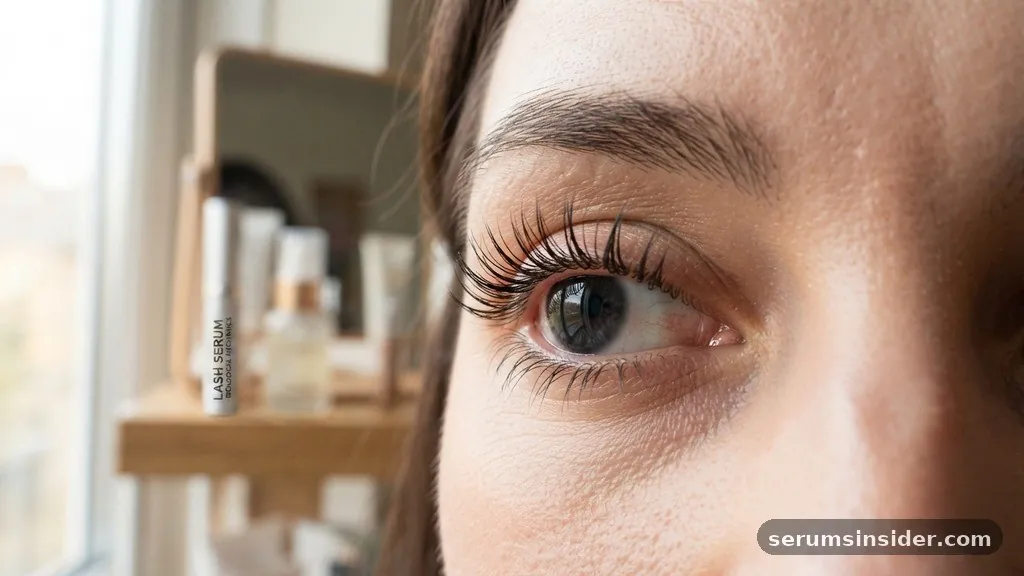
If you have ever found yourself staring into the mirror, wishing for a more dramatic lash line without the daily hassle of falsies or heavy mascara, you have likely come across the category of lash serums. At its core, the question of what does eyelash serum do is rooted in the intersection of cosmetic chemistry and dermatological health.
These specialized formulas are designed to enhance the appearance lashes by fostering an environment where your natural hair can thrive. Whether you are dealing with brittle, short, or sparse lashes, these serums help by delivering targeted nutrients directly to the hair follicle, potentially changing the trajectory of your lash health.
The Biological Mechanics of Lash Growth
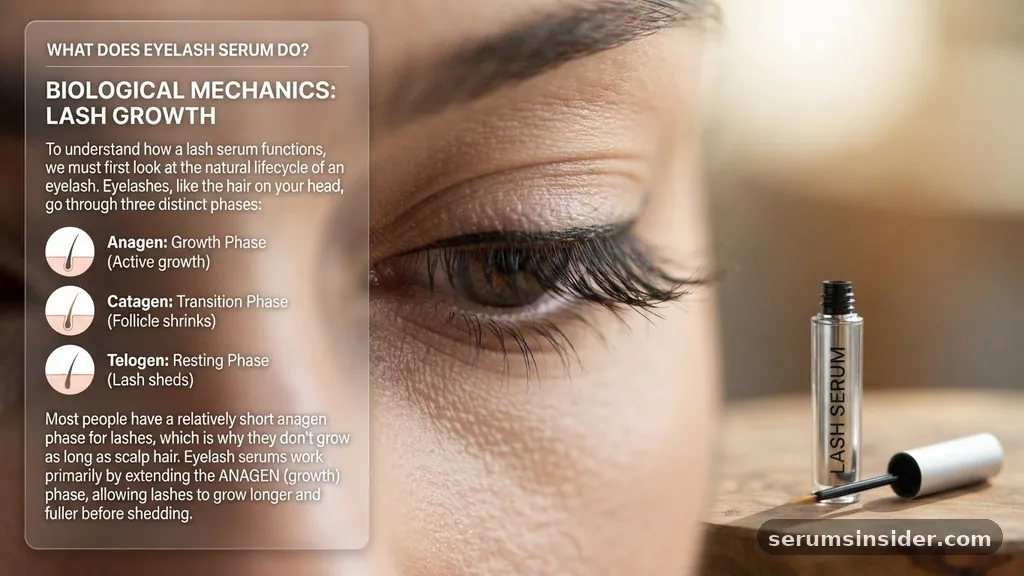
To understand how a lash serum functions, we must first look at the natural lifecycle of an eyelash. Eyelashes, like the hair on your head, go through three distinct phases: the anagen (growth) phase, the catagen (transition) phase, and the telogen (resting) phase.
Most people have a relatively short anagen phase for their lashes, which is why they rarely grow to extreme lengths naturally. When you are using lash products, you are often applying active ingredients that aim to extend the duration of the anagen phase.
By keeping the hair in the growth phase for a longer period, the individual lash has more time to gain length and volume before it eventually sheds. Many high-quality formulas contain peptides, amino acids, and vitamins like biotin or panthenol. These ingredients work by strengthening the hair shaft and conditioning the follicle.
When the follicle is properly nourished, the resulting hair is often more resilient, meaning it is less likely to break or fall out prematurely. This leads to the illusion—and sometimes the reality—of longer-looking lashes that appear darker and more defined.
Key Ingredients and Their Cosmetic Function
Not all products are created equal, and the efficacy of a product depends heavily on its ingredient list. Some serums focus on hydration, while others incorporate prostaglandin analogs, which are potent compounds capable of stimulating hair follicles quite aggressively.
Prostaglandins were originally discovered when patients using glaucoma medication noticed their eyelashes becoming significantly longer and thicker as a side effect. This discovery changed the cosmetic industry forever, leading to the development of dedicated growth-enhancing solutions.
However, it is important to note that while these ingredients are effective, they are also the most likely to cause irritation for those with sensitive eyes. Other common ingredients include peptides, which are chains of amino acids that act as building blocks for keratin, the primary protein in your lashes.
Hyaluronic acid is another popular addition, as it draws moisture into the lash, preventing the brittleness that often comes with daily mascara use and mechanical curling. When you choose a serum, you are essentially choosing a cocktail of nutrients tailored to support the structural integrity of your eyelashes.
- Peptides: Support keratin production to strengthen the lash shaft.
- Prostaglandin Analogs: Directly stimulate follicle activity to encourage growth.
- Biotin/Vitamin B7: Promotes hair health and prevents breakage.
- Hydrating Agents: Such as hyaluronic acid or panthenol to maintain lash flexibility.
- Botanical Extracts: Often included for soothing the delicate skin around the eyelid.
Setting Realistic Expectations and Timeline
One of the most common misconceptions regarding lash growth is that results are instantaneous. In reality, you need several weeks of dedicated application to see any noticeable changes.
Because the lash growth cycle is slow, you should not expect a dramatic transformation overnight. Most dermatologists and beauty experts suggest that you need at least weeks consistent application—often between 8 to 12 weeks—to see the full potential of the treatment.
During the first few weeks, you might not notice much of a difference in thickness or length. You might, however, notice that your lashes feel softer or look slightly shinier due to the conditioning agents in the formula.
It is crucial to remain patient and avoid the temptation to over-apply the product in hopes of speeding up the process. Excessive application does not accelerate growth; instead, it often leads to product runoff into the eye, which can cause redness, stinging, or even unwanted pigmentation on the eyelid skin.
Addressing Safety Concerns and Potential Side Effects
Is eyelash serum bad for your eyes? This is a frequent concern for consumers. While most over-the-counter options are formulated to be safe for the delicate periorbital area, there are risks associated with improper use.
The most common side effects include mild irritation, itching, or redness along the lash line. In some cases, particularly with products containing prostaglandin analogs, users have reported darkening of the iris or thinning of the eyelid skin.
If you have a history of ocular conditions or sensitive eyes, it is wise to consult with an ophthalmologist before starting a new regimen. Furthermore, always perform a patch test on your inner forearm to ensure you do not have an allergic reaction to the specific preservatives or botanical extracts in the formula.
If you experience persistent blurred vision, severe irritation, or swelling, you should immediately stop using the product and seek medical advice. For more information on maintaining eye health while using cosmetic products, visit the American Academy of Ophthalmology for official guidance on eye safety.
| Feature | Conditioning Serum | Growth-Stimulating Serum |
|---|---|---|
| Primary Goal | Moisture and strength | Increased length and volume |
| Active Ingredients | Peptides, Vitamins, Oils | Prostaglandins or analogs |
| Risk Level | Low | Moderate |
| Time to Results | 4-6 weeks | 8-12 weeks |
Bridging the Gap: Brows and Beyond
A common question that arises is whether these formulas work on eyebrows as well. The biological structure of eyebrow hair is remarkably similar to that of eyelashes, meaning that many of the same active ingredients can indeed promote fuller-looking brows.
However, the skin around the eyebrows is different from the skin on the eyelid. The eyelid is the thinnest skin on the body, making it highly absorbent and sensitive to irritants.
When applying a serum to your eyebrows, you can generally be a bit more liberal, as the skin is thicker and less prone to the specific types of irritation that occur near the eye. That said, you should still look for non-comedogenic formulas to avoid clogging your pores, which could lead to breakouts around the brow bone.
Many people find that using a serum on their eyebrows helps fill in sparse patches caused by over-plucking or age-related thinning. Just remember that the hair growth cycle for brows is often longer than that of lashes, so you may need to commit to the routine for an even longer duration to see significant results.
Maintenance and Long-Term Lash Health
Once you have achieved your desired lash length and density, the question becomes how to maintain those results. Unfortunately, the effects of lash serums are not permanent.
If you stop using the serum, your eyelashes will eventually return to their natural growth cycle and previous appearance. This means that once your lashes have reached their peak potential, you can usually transition to a maintenance phase, applying the product every other day or a few times a week rather than daily.
Beyond the serum, protecting your lashes from mechanical damage is equally important. Avoid rubbing your eyes, as this can cause lash breakage and even lead to premature shedding. When removing mascara, use a gentle, oil-based cleanser that dissolves the product without requiring you to scrub or pull at your lashes.
By combining a high-quality serum with gentle daily habits, you can sustain the thickness and health of your lashes indefinitely. Remember that consistency is the bridge between a simple product and visible, long-term growth.
Frequently Asked Questions
Does eyelash serum really make lashes longer?
Yes, many serums effectively increase the length of lashes by extending the growth phase of the hair follicle. However, results vary based on the active ingredients used and individual biology. Consistency is key, and it typically takes several weeks of daily application to see a noticeable difference.
Can I use lash serum while wearing contact lenses?
It is generally recommended to remove your contact lenses before applying the serum. Wait about 15 to 20 minutes after application before reinserting your lenses to ensure the product has fully absorbed and there is no risk of the serum getting trapped behind the lens.
What happens if I stop using the serum?
If you stop using the product, your eyelashes will gradually return to their natural growth cycle. Within a few weeks or months, as the treated lashes shed and are replaced by new ones, you will lose the extra length and fullness you gained during the treatment period.
Are there any natural alternatives to chemical lash serums?
While oils like castor or coconut are often touted as natural alternatives, they primarily provide conditioning and hydration. They help prevent breakage, which can make lashes look healthier, but they do not contain the active ingredients necessary to stimulate the follicles for significant new growth.
In summary, understanding what does eyelash serum do allows you to make an informed decision about your beauty regimen. These products act as powerful tools for enhancing your natural assets, provided they are used with care and patience. By prioritizing high-quality ingredients and maintaining a consistent routine, you can safely achieve the appearance of fuller, more defined lashes while preserving the health of your eyes.


