

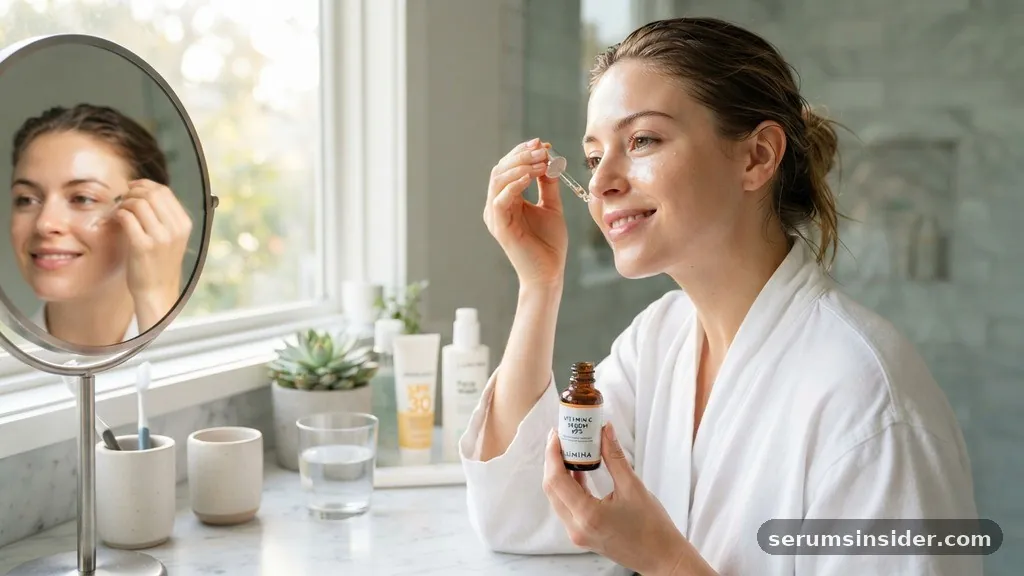
Incorporating a potent vitamin serum into your daily regimen is one of the most effective ways to brighten your complexion and combat environmental stressors. While many skincare enthusiasts are familiar with the benefits of this powerhouse ingredient, confusion often arises regarding the optimal time of day for application.
Determining when do you use vitamin c serum effectively depends largely on your specific skin concerns, the formulation of your product, and how it interacts with other active ingredients in your skincare routine. By understanding the chemistry behind this antioxidant, you can maximize its efficacy and ensure your skin receives the necessary protection against daily damage.
The Case for Morning Application

For the vast majority of dermatologists and skincare experts, the morning is considered the gold standard for applying your vitamin C. This is because the primary function of this acid is to neutralize free radicals generated by exposure to UV rays, pollution, and blue light.
When you apply vitamin C in the morning, you are essentially providing your complexion with a shield that works in tandem with your sunscreen. Because these environmental triggers are most prevalent during daylight hours, the antioxidant properties of the serum are best utilized as a preventative measure.
When you use the product in the day, it stabilizes the skin’s barrier and helps prevent the oxidative stress that leads to premature aging, hyperpigmentation, and dullness. Think of it as a secondary layer of defense. While sunscreen blocks UV radiation, the vitamin C serum addresses the damage that manages to bypass the physical barrier.
Consistency is key here; by making it a fixed step in your morning ritual, you ensure that your face is prepared to face the elements before you even step out the door. It is important to wait a few minutes after application to allow the skin to absorb the formula fully before moving on to your moisturizer or SPF.
Can You Use Vitamin C at Night?
While the morning is the most commonly recommended time, there is no strict rule stating you cannot use a vitamin serum at night. Some individuals prefer nighttime application because it allows the formula to work without the interference of environmental pollutants.
However, it is essential to consider the stability and concentration of the specific product you are using. If you have a highly potent formula that you find slightly irritating or if you prefer to layer it with other nighttime actives like retinoids, you must be cautious.
If you choose to use it in the evening, ensure that it does not conflict with other treatments. For example, many people find that using high-strength vitamin C alongside strong chemical exfoliants or retinol can lead to irritation. Furthermore, since the skin undergoes a repair process while you sleep, applying an antioxidant can certainly support this cycle.
If you decide to incorporate it into your evening care routine, keep in mind that you are losing the daytime protective benefits. Therefore, if you only have one serum, the morning is usually the superior choice for overall skin health and long-term protection.
Layering Order: When to Apply
Understanding where this serum fits into your routine is just as important as knowing the time of day. As a general rule of thumb, you should apply products from thinnest to thickest consistency.
Because most vitamin C serums are water-based or lightweight, they should be applied after cleansing and toning, but before your heavier moisturizer. Applying it after your moisturizer would likely prevent the active ingredients from penetrating the skin barrier effectively, rendering the product less useful.
If you are using a toner, wait for it to dry completely before applying your serum. Once the serum has been absorbed—usually taking about one to three minutes—you can proceed with your hydrating lotion or cream. This layering order ensures that the potent actives have direct contact with the epidermis.
If you are struggling with dry skin, you may be tempted to skip the serum or apply it after a heavy cream, but this often defeats the purpose. Instead, opt for a formula that includes humectants like hyaluronic acid, which can provide hydration while delivering the vitamin C.
| Application Stage | Product Type | Purpose |
|---|---|---|
| Step 1 | Cleanser | Remove impurities and prep skin |
| Step 2 | Toner | Balance pH levels |
| Step 3 | Vitamin C Serum | Provide antioxidant protection |
| Step 4 | Moisturizer | Lock in hydration |
| Step 5 | Sunscreen | Block UV radiation |
Common Conflicts and Compatibility
One of the most frequent questions regarding using vitamin C is what it should not be mixed with. Because it is an acid, it is often sensitive to pH changes.
Mixing it with certain ingredients can cause the vitamin C to oxidize rapidly, making it lose its potency, or it can cause significant skin irritation. For instance, using it at the same time as alpha-hydroxy acids (AHAs) or beta-hydroxy acids (BHAs) can be too harsh for many skin types.
To navigate this, many professionals suggest a “split” routine. You might use your exfoliating acids at night and your vitamin C in the morning. This way, you get the benefits of both without compromising your skin barrier.
Similarly, if you are using niacinamide, some older research suggested a conflict, but modern formulations have largely mitigated this. Still, if you have sensitive skin, it is best to wait 15–20 minutes between applying different active ingredients to allow the skin’s pH to return to its natural state. You can consult the American Academy of Dermatology for more information on maintaining a healthy skin barrier while using active ingredients.
Addressing Topical Gaps: Formulation Matters
The effectiveness of your serum is heavily dependent on the type of vitamin C derivative used in the formula. L-ascorbic acid is the most researched and potent form, but it is also the most unstable. If your serum has turned a dark orange or brown color, it has likely oxidized and is no longer effective.
This color change is a clear indicator that the product should be discarded. When selecting the best serum, look for opaque, airtight packaging, as light and air are the primary enemies of vitamin C stability.
Some users prefer derivatives like sodium ascorbyl phosphate or magnesium ascorbyl phosphate, which are more stable and less irritating than pure L-ascorbic acid. While these might act slightly differently, they still provide excellent antioxidant support.
When incorporating vitamin C into your routine, remember that starting with a lower concentration (around 5% to 10%) is a wise move if you are a beginner. Once your skin builds tolerance, you can move up to higher concentrations (15% to 20%) for more dramatic brightening effects.
Tips for Maximizing Your Results
To get the most out of your care routine, consistency is more important than the concentration of the product. Using a lower-percentage serum daily is far more effective than using a high-percentage serum sporadically.
Furthermore, keep in mind that vitamin C is not a miracle cure for all skin issues; it works best as part of a comprehensive skincare routine. It will not replace the need for hydration, sun protection, or proper cleansing.
- Store your serum in a cool, dark place to maintain stability.
- Always check the color of your serum; if it turns dark, it has oxidized.
- Apply to clean, dry skin for better absorption.
- Pair with a broad-spectrum sunscreen every single morning.
- Be patient, as visible improvements in brightness and tone typically take 6 to 8 weeks.
Frequently Asked Questions
Can I use vitamin C serum and retinol at the same time?
It is generally recommended to separate them. Use vitamin C in the morning for environmental protection and save your retinol for the evening. This prevents potential irritation and ensures both ingredients remain stable and effective throughout your skincare routine.
What happens if I forget to wear sunscreen after vitamin C?
While vitamin C provides some antioxidant defense, it is not a sunscreen. If you skip SPF, your skin remains vulnerable to UV damage, which can negate the brightening effects of the serum and accelerate signs of aging like fine lines and dark spots.
Does vitamin C serum expire?
Yes, all skincare products have a shelf life. Vitamin C is particularly prone to oxidation. If your serum has changed color to a dark yellow or brown, or if it has developed an off-putting odor, it is time to replace it as it is no longer effective.
Is it okay to use vitamin C if I have sensitive skin?
Yes, but you should start slowly. Look for lower concentrations (around 5%) or more stable, less acidic derivatives like magnesium ascorbyl phosphate. Patch test the product on your neck or inner arm before applying it to your entire face to ensure no adverse reaction occurs.
In conclusion, knowing when do you use vitamin c serum is a foundational aspect of achieving a radiant, healthy complexion. By prioritizing morning application to leverage its powerful antioxidant properties against daily environmental stressors, you set the stage for long-term skin vitality.
Always remember to layer your products correctly—thinnest to thickest—and never skip the final step of sunscreen. With the right formulation and a consistent approach, this versatile serum can become the most valuable player in your daily beauty regimen.


