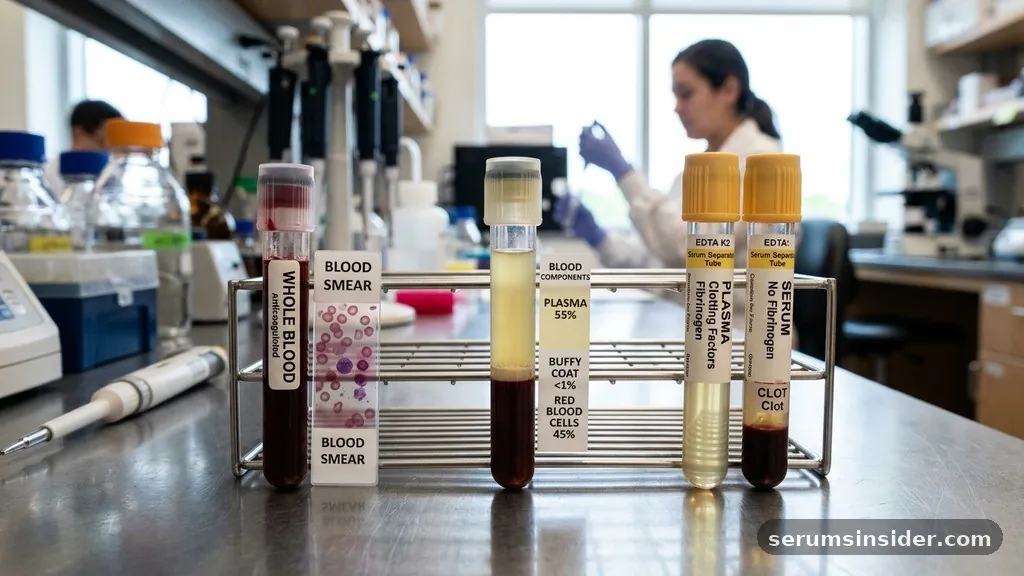
When a healthcare professional draws a blood sample, the resulting liquid components—plasma and serum—often look nearly identical to the naked eye. However, at a molecular level, they represent distinct states of the blood’s liquid matrix, each serving specific purposes in clinical diagnostics and research. Understanding the difference between plasma and serum is fundamental to laboratory science, as the presence or absence of specific proteins dictates how a sample reacts during an assay or diagnostic test.
The Biological Composition of Blood Components
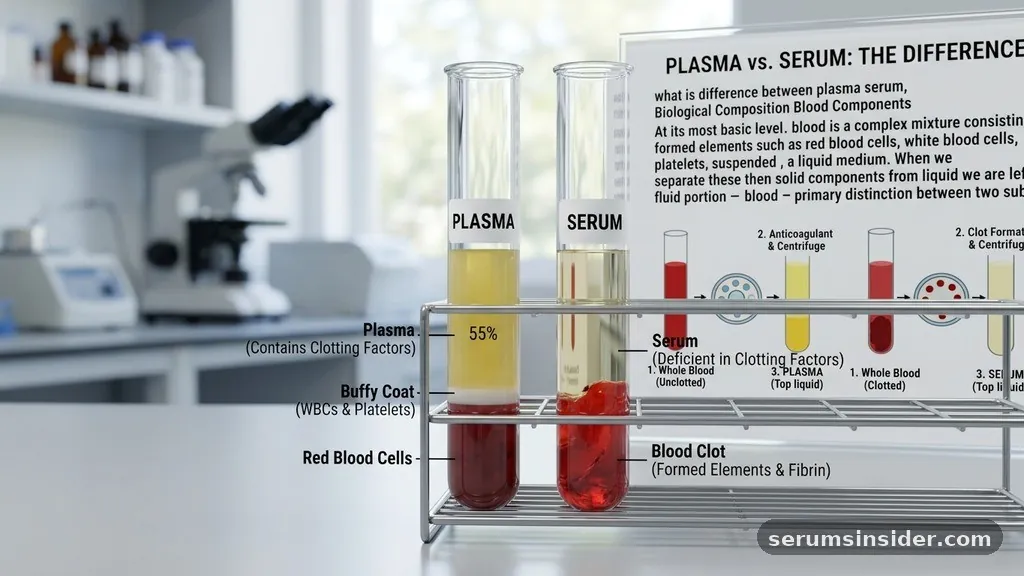
At its most basic level, blood is a complex mixture consisting of formed elements—such as red blood cells, white blood cells, and platelets—suspended in a liquid medium. When we separate these solid components from the liquid, we are left with the fluid portion of the blood. The primary distinction between the two substances lies in the presence or absence of coagulation proteins.
Plasma is the straw-colored, liquid portion of blood in its natural, circulating state. It makes up approximately 55% of the total blood volume. It is essentially the blood minus the cellular components.
Because plasma is collected from blood that has been treated with an anticoagulant to prevent clotting, it retains its full complement of proteins, including fibrinogen. Fibrinogen is a soluble protein that plays a critical role in the coagulation cascade. When you look at a sample of plasma, you are looking at the fluid as it exists within the vascular system, effectively “frozen” in time by chemical inhibitors.
Serum, by contrast, is the liquid that remains after blood has been allowed to clot. When blood is collected in a tube without an anticoagulant, the clotting process begins almost immediately. During this time, fibrinogen is converted into solid fibrin, which forms a mesh-like structure to trap blood cells and platelets, creating a clot.
Once the clot forms and is removed via centrifugation, the remaining liquid is serum. Because the clotting factors have been consumed in the process, serum is essentially plasma minus the clotting factors. This difference is critical for pathologists and lab technicians who must choose the correct sample type for specific medical tests.
Mechanics of Separation and Collection Tubes
The physical separation of these two fluids requires specific laboratory techniques and equipment. The most common method for separating blood components is through centrifugation, where a high-speed spinning process forces the denser cellular components to the bottom of the collection vessel. The way that vessel is prepared before the blood enters it determines whether you end up with plasma or serum.
Collection tubes are color-coded based on the additives they contain. To obtain plasma, the tube must contain an anticoagulant that prevents the blood from forming a clot. Common anticoagulants include EDTA, which binds calcium to stop the coagulation cascade, or citrate, which is frequently used for coagulation studies.
Because these additives prevent fibrinogen from becoming fibrin, the resulting fluid remains plasma. If you use an EDTA plasma sample for testing, you are working with a fluid that still contains the proteins involved in clotting.
Serum collection tubes, often identified by a red or gold cap, contain no anticoagulants. Instead, they often contain a clot activator—a substance that accelerates the coagulation process—and sometimes a gel separator that moves between the serum and the clotted cells during centrifugation. By allowing the blood to fully clot before spinning, the laboratory ensures that the fibrinogen has been entirely converted into a solid fibrin clot.
This distinction in the tube environment is the primary factor that dictates the chemical profile of the sample. Choosing the wrong tube can lead to inaccurate test results, such as false-positivity or interference with specific assays that are sensitive to the presence of fibrin strands.
Comparing Key Biochemical Properties
To truly grasp the difference between plasma and serum, it is helpful to look at a side-by-side comparison of their characteristics. While they share many similarities, such as containing water, electrolytes, hormones, and antibodies, the absence of clotting factors in serum makes it a more stable environment for certain types of chemical analysis.
| Feature | Plasma | Serum |
|---|---|---|
| Clotting Factors | Present (including Fibrinogen) | Absent (consumed during clotting) |
| Preparation | Requires anticoagulant | Requires natural clotting |
| Composition | Fluid + Fibrinogen | Fluid – Fibrinogen |
| Primary Use | Coagulation studies, emergency tests | Biochemical profiling, serology |
The presence of fibrinogen in plasma can sometimes be a hindrance. If a sample is improperly handled, small amounts of fibrin can precipitate out of the plasma, creating interference in automated testing equipment. Serum, having already gone through the clotting process, is generally free of these potential artifacts.
However, because serum requires time to clot—usually 30 to 60 minutes—it is less suitable for emergency situations where immediate results are required. Plasma can be processed immediately after collection, making it the preferred choice in critical care settings where every minute counts.
Clinical Applications and Diagnostic Utility
The decision to use either serum or plasma often depends on the specific analyte being measured. Many clinical chemistry tests are validated for use with serum.
For instance, testing for electrolytes, liver enzymes, or lipid profiles is traditionally performed on serum. Because serum is the “cleaner” product in terms of protein content, it is often preferred for protein electrophoresis or tests that measure specific antibodies (serology).
Plasma is indispensable in hematology and coagulation testing. Since you cannot measure the levels of clotting factors in a sample that has already clotted, plasma is the only viable option for these assessments.
If a physician needs to check a patient’s prothrombin time or activated partial thromboplastin time, they must use citrate plasma. Furthermore, plasma is the standard for many molecular diagnostic tests, such as viral load testing, where the rapid processing of the sample minimizes the degradation of delicate genetic material.
In research settings, scientists often use an ELISA kit to detect specific proteins or hormones. The choice between plasma and serum for an ELISA assay depends on the manufacturer’s recommendations.
Some assays are sensitive to the anticoagulants used in plasma collection, which may interfere with the binding reagents in the kit. Conversely, other assays might be specifically designed for plasma to avoid the potential for non-specific binding that can sometimes occur in the complex protein environment of serum.
Addressing Common Misconceptions
A frequent point of confusion is the assumption that plasma and serum are interchangeable. While they are both derived from the same source and share a large percentage of their chemical makeup, they are not identical.
The removal of fibrinogen and other clotting factors during the serum preparation process changes the protein composition of the final fluid. For high-precision diagnostics, treating them as the same can lead to significant errors.
Another common misconception is that one is “better” than the other. There is no objective “better” fluid; there is only the right tool for the job.
Plasma is superior for speed and coagulation assessment, while serum is the gold standard for many routine biochemical panels. The “best” choice is dictated by the specific requirements of the diagnostic instrument being used and the stability of the analyte in the presence of specific anticoagulants.
Furthermore, some believe that plasma is simply “blood with the cells removed” without considering the chemical impact of the additives. It is important to remember that the anticoagulants used to create plasma are not inert. They are active chemicals that can affect the results of certain assays.
For example, EDTA plasma is excellent for many tests, but it can chelate divalent cations, which might interfere with tests that rely on calcium or magnesium. Understanding these nuances is what separates a routine lab technician from an expert in clinical chemistry.
Topical Gaps: Stability and Storage Considerations
One area that is rarely discussed in basic overviews is the stability of samples over time. Both plasma and serum are susceptible to degradation if not stored correctly. Once separated, the fluid is prone to evaporation, bacterial growth, and the breakdown of unstable metabolites.
When storing samples, temperature control is paramount. For short-term storage, both fluids can typically be kept at 2–8°C. However, for long-term storage, they must be frozen, preferably at -80°C.
A key difference in stability arises from the presence of residual platelets or other cellular debris that might remain in a poorly centrifuged plasma sample. These can continue to metabolize glucose or alter the pH of the sample over time, leading to inaccurate results for metabolites like lactate or ammonia.
Serum, having undergone the clotting process, is generally more “stable” in terms of its protein profile, as the major enzymatic processes associated with coagulation have already concluded. However, the clotting process itself can release intracellular contents from platelets into the serum, which can artificially elevate levels of potassium or certain enzymes like lactate dehydrogenase.
This is why the timing of separation—the interval between collection and centrifugation—is a critical variable in laboratory quality control. Ensuring that the blood is processed within a standard timeframe is essential to minimizing these pre-analytical errors, regardless of whether one is preparing plasma or serum for analysis.
Frequently Asked Questions
What is the main difference between serum and plasma?
The primary difference is the presence of clotting factors. Plasma contains fibrinogen and other proteins involved in blood coagulation because it is collected with an anticoagulant. Serum is the liquid remaining after blood has been allowed to clot, meaning fibrinogen has been converted into solid fibrin.
Which is better for testing, serum or plasma?
Neither is objectively better; the choice depends on the specific test. Plasma is required for coagulation studies and rapid diagnostic needs. Serum is often preferred for routine biochemical profiling and serology, as it is free from anticoagulant interference and the presence of fibrinogen, which can interfere with some assays.
Why would a doctor order a serum test?
A doctor typically orders a serum test for routine metabolic panels, lipid profiles, or antibody detection. Because serum is free of clotting factors and anticoagulants, it provides a stable, clean environment for many automated chemistry analyzers, ensuring that the results for proteins, enzymes, and electrolytes remain accurate and consistent.
Is plasma the same thing as serum?
No, they are not the same. While both are the liquid components of blood, they differ in chemical composition. Plasma is the fluid portion of blood in its circulating state, preserved with anticoagulants. Serum is the fluid portion of blood that has been depleted of its clotting factors through the coagulation process.