The quest for a radiant, glowing complexion often leads skincare enthusiasts toward the popular shelves of brightening treatments. Among these, vitamin serum stands out as a gold standard for addressing hyperpigmentation, uneven tone, and environmental damage. However, a recurring concern frequently surfaces on forums and social media: can vitamin c serum cause acne?
The answer is nuanced, as the product itself is rarely the direct culprit of a breakout, but the way your skin interacts with specific formulations can certainly trigger unwanted reactions. Understanding the mechanics of these products is essential for anyone looking to improve their routine without compromising their pore health.
The Chemistry Behind Vitamin C and Skin Reactions
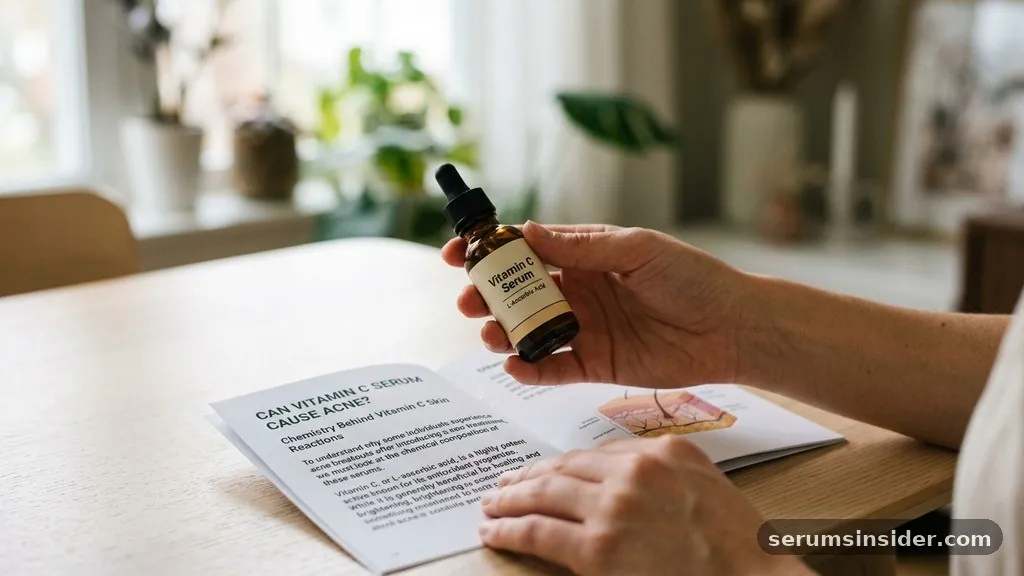
To understand why some individuals experience acne breakouts after introducing a new treatment, we must look at the chemical composition of these serums. Vitamin C, or L-ascorbic acid, is a highly potent active ingredient known for its antioxidant properties. While it is generally beneficial for healing and brightening, the formula in which it is delivered can be problematic for certain skin types.
Many manufacturers combine ascorbic acid with various carrier agents, stabilizers, and preservatives to ensure the product remains effective over time. If these secondary components are comedogenic—meaning they have the potential to clog pores—they can lead to the formation of pimples or whiteheads.
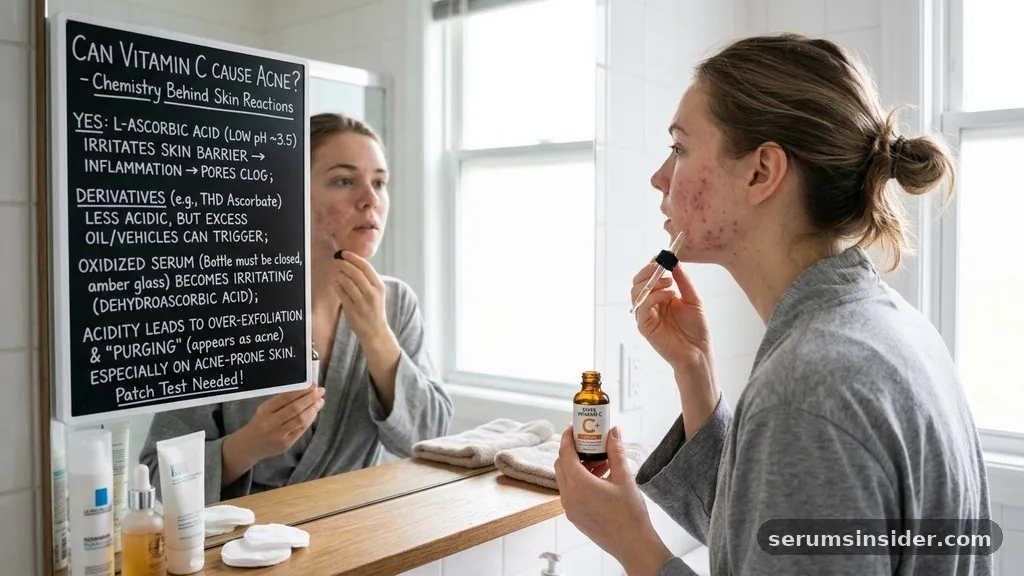
Furthermore, the low pH level required to keep vitamin C stable can sometimes disrupt the skin’s natural acid mantle. When this protective barrier is compromised, the skin becomes more susceptible to external bacteria and inflammation.
If your face is already prone to congestion, this temporary shift in barrier health might manifest as a breakout. It is not necessarily the vitamin C itself that is to blame, but rather the unintended side effects of the product’s acidity or the presence of heavy, pore-clogging emollients added to the solution to soothe the skin.
Distinguishing Between Purging and True Breakouts
A critical factor in determining if a new product is causing harm is distinguishing between a genuine reaction and a phenomenon known as purging. Many people mistakenly assume that any sudden appearance of spots is a negative reaction, but this is not always the case. Purging occurs when an active ingredient accelerates the skin’s cell turnover rate.
As the skin sheds dead cells more rapidly, it brings underlying congestion—which was already destined to become a breakout—to the surface all at once. If you start using a vitamin C serum and notice an increase in blemishes in areas where you typically get them, it might be a sign that the product is doing its job by clearing out deep-seated debris.
In contrast, a true adverse reaction typically presents differently. If you notice pimples appearing in areas where you never usually break out, or if you experience significant redness, itching, or burning, this is a sign of irritation rather than purging. True irritation suggests that your skin barrier is reacting poorly to the ingredients within the vitamin serum.
In such cases, it is advisable to stop usage immediately to allow your skin to recover. Monitoring the timeline is key; purging usually subsides within a few weeks, whereas a reaction to an incompatible product will often worsen or remain stagnant as long as you continue to apply it.
Common Ingredients That Contribute to Congestion
When analyzing why a product might be causing issues, one must look beyond the primary active ingredient. Many serums are formulated with heavy oils, silicones, or thickeners that feel luxurious but can be disastrous for oily or acne-prone skin.
For instance, some formulations use vitamin E or ferulic acid in a base of plant oils. While these are excellent antioxidants, certain oils are highly comedogenic and can trap sebum within the pore, leading to the formation of acne.
It is helpful to evaluate the ingredients list for items that are known to be problematic for your specific skin type. If you have been using a serum that contains ingredients like isopropyl myristate, cocoa butter, or coconut oil, these are statistically more likely to cause issues than the vitamin C itself.
You can reference the American Academy of Dermatology for general guidance on selecting non-comedogenic skincare products. By selecting a water-based or lightweight serum, you significantly reduce the likelihood of encountering the congestion that often leads people to believe vitamin C is the enemy.
| Ingredient Type | Potential Impact on Acne | Recommendation |
|---|---|---|
| Water-based Serums | Low; usually non-comedogenic | Best for oily skin |
| Oil-based Serums | Moderate to High; can clog pores | Check for comedogenic rating |
| Silicones | Variable; may trap bacteria | Patch test before full use |
How to Safely Integrate Vitamin C into Your Routine
If you are determined to incorporate this powerful antioxidant without triggering a flare-up, a strategic approach is necessary. Start by introducing the product slowly. Instead of applying it twice daily, begin with one application every other day.
This “slow-start” method allows your skin to acclimate to the acid and the specific delivery system. If you see that your skin remains calm after a week or two, you can gradually increase the frequency to a daily morning application.
Always ensure your face is properly cleansed before application. Using a gentle, pH-balanced cleanser ensures that you are not layering the serum over dirt or environmental pollutants that could be trapped against the skin. Additionally, consider the order of operations in your skincare regimen.
Vitamin C should generally be applied to clean, dry skin after cleansing and before heavier moisturizers. By keeping the layers thin and breathable, you minimize the risk of creating a “suffocating” layer that could lead to acne breakouts. If you are worried about sensitivity, mixing a small amount of the serum into your moisturizer can dilute the potency slightly while your skin builds tolerance.
Addressing Topical Gaps: Why Some Users Experience Sensitivity
A common misconception is that vitamin C is universally tolerated. However, the skin is an organ with unique needs and sensitivities. A major gap in the conversation around can vitamin c serum cause acne is the role of product oxidation.
Vitamin C is notoriously unstable. When exposed to light and air, it can oxidize, turning a light yellow or orange color.
An oxidized serum is not only less effective but can also become more irritating to the skin. Applying a degraded, unstable formula can lead to contact dermatitis or localized inflammation, which the user might misidentify as an acne breakout.
Another gap involves the concentration level. Some users jump straight to high-strength 20% formulas, thinking higher is better. In reality, a high concentration of L-ascorbic acid can be overkill for many, leading to a stinging sensation and compromised barrier function.
This damage often triggers a reactive breakout as the skin tries to protect itself. Finding a lower concentration, perhaps between 5% and 10%, is often enough to reap the benefits of brightening and collagen synthesis without overtaxing the skin’s natural defenses. Always look for airless pump packaging, which helps preserve the integrity of the formula and prevents premature oxidation.
The Role of Lifestyle and External Factors
While we focus heavily on the products we apply, it is essential to remember that acne is multifactorial. Your diet, stress levels, hormones, and environmental exposure play significant roles. Sometimes, a breakout that coincides with starting a new serum is purely coincidental.
For example, if you start a new product during a period of high stress or hormonal fluctuation, it is easy to blame the serum. To get a clear picture, try to keep your other skincare habits consistent when introducing a new item. Do not change your moisturizer, cleanser, or sunscreen at the same time, as this makes it impossible to identify the true source of a reaction.
Furthermore, consider the environment where you store your skincare. Storing your vitamin C serum in a hot, humid bathroom can accelerate its degradation. Keeping it in a cool, dark place—or even the refrigerator—can help maintain its efficacy.
If you suspect your serum has gone bad, do not force yourself to finish it. Trust your instincts; if the texture, smell, or color has changed significantly, it is time to discard it. Investing in high-quality, stable formulations is an investment in your skin’s health.
Frequently Asked Questions
Can vitamin C serum cause purging?
Yes, some vitamin C serums can cause a temporary purging phase if they contain exfoliating acids or ingredients that increase cell turnover. This typically lasts for two to four weeks. If the breakouts persist beyond this timeframe or are accompanied by intense stinging, it is likely irritation rather than purging.
Why do I get whiteheads after using vitamin C?
Whiteheads are often a sign that the serum’s base is too heavy or comedogenic for your skin type. If the formula contains thick oils, waxes, or silicones, these ingredients may be clogging your pores. Switch to a water-based, oil-free formula to see if the issue resolves.
Is it safe to use vitamin C on active acne?
It can be safe, but you must be cautious. High-strength acidic formulas can sting or inflame open lesions. If you have active, painful breakouts, look for gentler derivatives like sodium ascorbyl phosphate, which is often less irritating and has been shown to have antimicrobial properties that may help manage acne.
How do I know if my vitamin C serum has gone bad?
An expired or oxidized vitamin C serum often changes color from clear or pale yellow to a deep orange or brown. It may also develop an unpleasant, metallic, or “hot dog water” scent. Using an oxidized product is ineffective and increases the risk of skin irritation.
In conclusion, while it is possible for a vitamin C serum to contribute to acne, it is rarely the active ingredient itself that is at fault. By choosing non-comedogenic formulas, introducing products slowly, and being mindful of storage and expiration, you can safely enjoy the benefits of this potent antioxidant. Always listen to your skin; if a product causes persistent redness or breakouts, discontinue use and evaluate the ingredient list to find a more suitable alternative.