When you look in the mirror and notice uneven patches or lingering marks from past breakouts, it is natural to wonder: does vitamin c serum help with dark spots? The short answer is yes, but the path to clearer skin requires understanding the science behind how this powerhouse antioxidant functions.
Vitamin C, or L-ascorbic acid, is widely celebrated in the beauty industry, but its efficacy in treating hyperpigmentation is rooted in specific biochemical pathways that inhibit excess pigment production. By neutralizing oxidative stress and interacting with the skin’s natural melanin-producing enzymes, this topical vitamin can indeed brighten the complexion and promote a more uniform skin tone over time.
The Biological Mechanism of Vitamin C on Hyperpigmentation
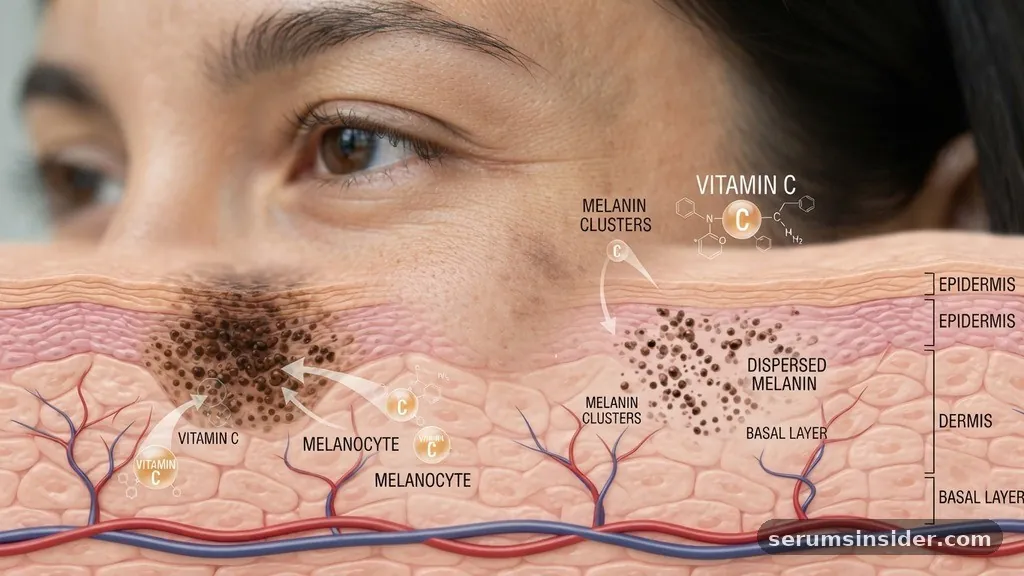
To understand why a vitamin serum is effective against brown marks, we must first look at the process of melanogenesis. Dark spots, often referred to as hyperpigmentation, occur when the skin produces an excess of melanin in response to triggers like ultraviolet (UV) exposure, inflammation, or hormonal changes. Vitamin C acts as a potent tyrosinase inhibitor.
Tyrosinase is the enzyme responsible for the conversion of tyrosine into melanin. By effectively “turning down” the activity of this enzyme, vitamin C helps prevent the formation of new dark spots while gradually fading existing ones.
Furthermore, this ingredient works by neutralizing free radicals, which are unstable molecules generated by pollution, smoke, and solar radiation. These free radicals trigger an inflammatory response that can lead to increased pigment production.
By scavenging these harmful molecules, vitamin C protects the skin from the oxidative damage that often exacerbates acne scars and sun-induced discoloration. When you apply a stable formulation, you are essentially providing your skin with a defensive shield that allows it to repair itself without being constantly bombarded by environmental stressors that darken existing marks.
Differentiating Between Types of Vitamin C
Not all products are created equal, and the success of your treatment often depends on the specific derivative used in your formula. L-ascorbic acid is the most researched and potent form of the vitamin, but it is notoriously unstable and can be irritating to sensitive skin.
For individuals with melanin-rich skin or those prone to irritation, more stable derivatives like sodium ascorbyl phosphate or tetrahexyldecyl ascorbate may be a better choice. These forms are often less acidic and have a higher penetration rate, which can be beneficial for those struggling with chronic pigmentation issues.
It is also important to consider the concentration. While a higher percentage of acid might seem better, anything above 20% often provides diminishing returns and increases the risk of redness or stinging. Many clinical studies suggest that a concentration between 10% and 15% is the “sweet spot” for achieving visible results without compromising the skin barrier.
When choosing a product, look for opaque, airtight packaging. Vitamin C is highly sensitive to light and air; if a serum turns dark orange or brown, it has oxidized and lost its efficacy, meaning it will no longer provide the benefits you are looking for.
Integrating Vitamin C into Your Daily Skincare Routine
Consistency is the most critical factor when using a vitamin serum to treat dark spots. You cannot expect overnight miracles; the skin cell turnover cycle typically takes about four to six weeks, and visible fading of stubborn pigmentation usually requires at least three months of dedicated use. Applying your serum in the morning is generally recommended because it maximizes the antioxidant protection provided during the day.
Following application, it is essential to use a broad-spectrum sunscreen. Without SPF, the UV rays will continue to stimulate melanin production, effectively undoing the work your serum is doing.
| Step | Action | Purpose |
|---|---|---|
| 1 | Cleansing | Removes impurities to prepare the skin. |
| 2 | Vitamin C Serum | Treats hyperpigmentation and provides antioxidant defense. |
| 3 | Moisturizer | Locks in hydration and supports the barrier. |
| 4 | Sunscreen | Prevents further UV-induced dark spot formation. |
Many people wonder if they can combine their vitamin C with other active ingredients. While it is generally safe, layering too many acids at once—such as using glycolic or salicylic acid at the exact same time—can lead to severe irritation.
If you are using prescription-strength retinoids, it is often best to keep them for your nighttime routine and save your vitamin C for the morning. This “day-night” split ensures you get the benefits of both ingredients without overwhelming your complexion.
Addressing Topical Gaps: Vitamin C vs. Other Brighteners
A common question in the skincare community is whether vitamin C is the “best” option compared to other popular ingredients like niacinamide, kojic acid, or hydroquinone. While hydroquinone remains the gold standard in some medical contexts for severe melasma, it is a potent chemical that requires physician supervision.
Vitamin C, by contrast, is an excellent long-term maintenance ingredient that supports overall skin health while addressing pigmentation. It doesn’t just lighten spots; it also promotes collagen production, which helps improve the texture and elasticity of the skin.
For those with acne-prone skin, it is worth noting that some vitamin C formulations can be comedogenic, depending on the base ingredients. Always check the label for non-comedogenic certifications if your skin is prone to breakouts. Additionally, while vitamin C helps with post-inflammatory hyperpigmentation (the marks left behind by acne), it does not treat active acne itself.
If you are currently dealing with a breakout, focus on clearing the inflammation first using appropriate acne treatments before moving to a brightening serum. You can learn more about the scientific consensus on skin health through the American Academy of Dermatology, which provides evidence-based resources on managing various dermatological conditions.
The Role of Sunscreen in Treatment Success
It is impossible to overstate the importance of sun protection when discussing whether vitamin c serum helps with dark spots. If you treat your skin with the most expensive, high-quality serum on the market but fail to wear SPF 30 or higher every single day, your efforts will be largely ineffective.
UV radiation is the primary trigger for the darkening of existing spots and the creation of new ones. Even on cloudy days, UVA rays penetrate through clouds and glass, meaning your skin is exposed to potential damage constantly.
Think of sunscreen as the “anchor” of your routine. When you combine daily antioxidant application with rigorous sun avoidance and protection, you create an environment where the skin can finally heal.
Over time, this dual-action approach prevents the “rebound” effect where spots seem to return as soon as you stop using your treatment. For those with deeper skin tones, look for mineral-based sunscreens containing zinc oxide or titanium dioxide, as these often leave less of a white cast and provide excellent broad-spectrum protection that is gentle on the skin.
Managing Expectations and Potential Side Effects
When starting a new vitamin serum, it is common to experience a slight tingling sensation, especially if your skin is not accustomed to acidic pH levels. However, true irritation—such as burning, itching, or peeling—is a sign that the product may be too strong or that you are using it too frequently.
If you have sensitive skin, start by applying the serum every other day or mixing it with your moisturizer to buffer the intensity. This “start low and go slow” approach allows your skin to build tolerance over time.
It is also worth noting that vitamin C may not work for every type of dark spot. While it is excellent for surface-level hyperpigmentation caused by the sun or acne, it may have limited impact on deeper dermal pigmentation or hormonal conditions like melasma, which often require a multi-modal approach involving professional procedures like chemical peels or laser therapy. If you have been using a high-quality serum for three months with no visible change, it may be time to consult a board-certified dermatologist to discuss whether other treatments might be more appropriate for your specific skin concerns.
Frequently Asked Questions
- Does vitamin C serum remove dark spots permanently? It helps fade existing spots and prevents new ones, but it does not provide permanent immunity. If you stop using it and continue to expose your skin to sun and inflammation, the hyperpigmentation will likely return.
- Is vitamin C or retinol better for dark spots? Both are effective but work differently. Vitamin C is a daytime antioxidant that inhibits pigment production, while retinol is a nighttime treatment that speeds up cell turnover. Many experts recommend using both in a balanced routine for the best results.
- Does vitamin C serum help with dark circles under eyes? It can help brighten the under-eye area by strengthening the skin and reducing pigment, but it is not a cure for dark circles caused by thin skin or genetics. Always use a formula specifically designed for the delicate eye area.
- Can vitamin C cause breakouts? While the vitamin itself does not usually cause acne, some serums contain oils or emulsifiers that can clog pores. If you are acne-prone, look for “oil-free” or “non-comedogenic” labels to ensure the serum won’t trigger new spots while you treat the old ones.
In conclusion, the efficacy of vitamin C in treating dark spots is well-supported by both clinical research and daily practice. By inhibiting the melanin-producing enzyme tyrosinase and neutralizing oxidative stress, this ingredient serves as a foundational element for anyone looking to achieve a more even, radiant complexion.
While it requires patience, consistency, and a strict commitment to sun protection, the long-term benefits for your skin health are significant. Whether you are dealing with sun damage or the aftermath of acne, incorporating a stable, well-formulated vitamin serum is a proven strategy for reclaiming your skin’s natural tone.