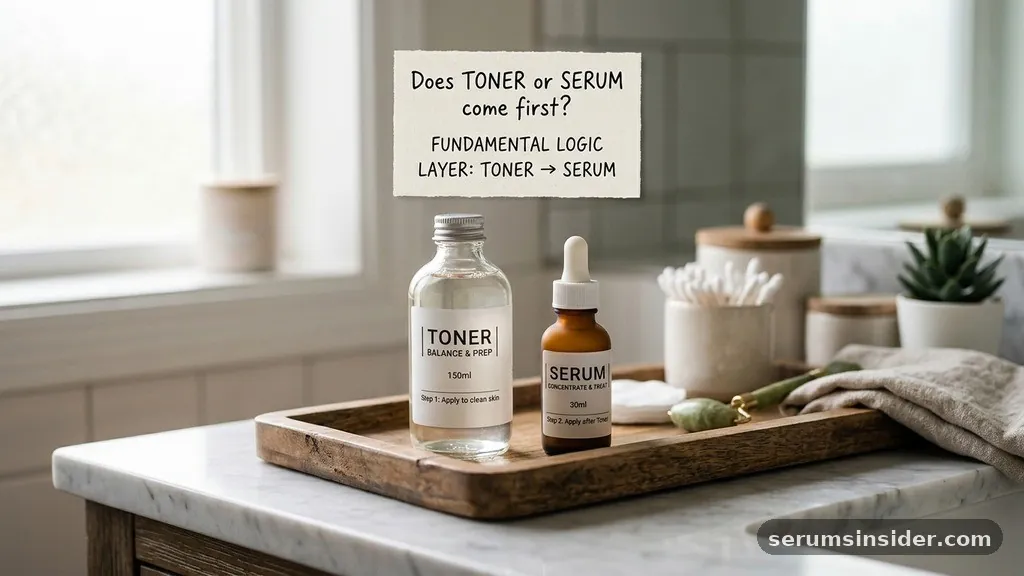
Navigating the complexities of a modern skincare routine can feel like solving a chemistry puzzle, especially when you are trying to determine the correct sequence for your skincare products. If you have ever stood in front of your bathroom mirror wondering does toner or serum come first, you are certainly not alone. The general rule of thumb in dermatology is to apply products from the thinnest, most watery consistency to the thickest, most emollient texture.
Because toners are typically liquid-based and designed to balance the skin’s pH after cleansing, they almost always precede serums, which are concentrated treatments formulated with high-potency active ingredients. Understanding this layering logic is essential for maximizing the efficacy of your regimen and ensuring that each product can penetrate the skin barrier effectively.
The Fundamental Logic of Layering Skincare Products

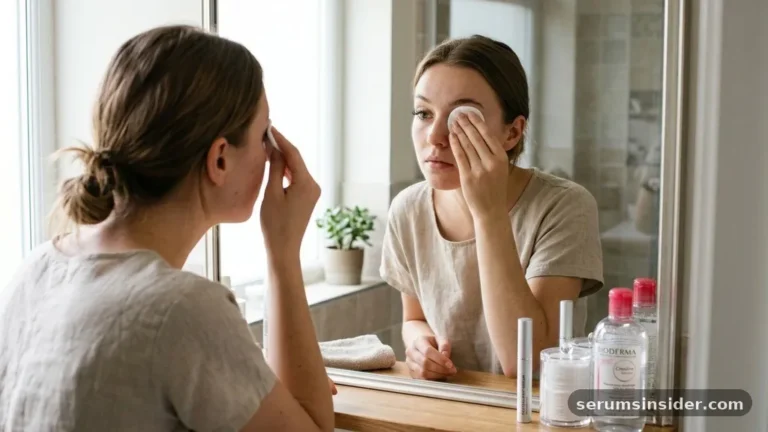
The primary reason for following a specific order when applying your products is to ensure optimal absorption. When you apply toner immediately after washing your face, you are prepping the skin surface.
Think of your skin like a sponge; when it is slightly damp from a hydrating toner, it is more receptive to the subsequent layers. If you were to apply a thick moisturizer or a heavy oil first, the smaller, more delicate molecules in your serum would struggle to bypass that occlusive barrier.
By placing the toner first, you remove any remaining impurities that the cleanser might have missed while simultaneously providing a base of hydration. Serums, on the other hand, are designed to deliver targeted benefits—whether it is brightening with Vitamin C, smoothing with retinol, or plumping with hyaluronic acid.
These potent formulas are expensive and highly concentrated, so you want to ensure they reach the deeper layers of the epidermis rather than sitting on top of a layer of cream. This logical progression of viscosity—from liquid to gel to lotion to cream—is the gold standard for achieving the best results from your daily regimen.
Why Toner Takes the First Spot After Cleansing
Toners have evolved significantly over the last decade. In the past, many were alcohol-heavy astringents that stripped the skin of its natural oils, but today’s formulations are primarily focused on pH balancing and surface hydration.
Once you finish cleansing, your skin’s natural pH level can be disrupted by the alkalinity of tap water or harsh surfactants in your soap. A good toner acts as a bridge, restoring the skin’s natural acidic mantle.
Applying this liquid step right after washing is crucial because it prepares the skin for the serum. If you wait too long after cleansing, the skin begins to lose moisture through transepidermal water loss. By applying your toner while the skin is still slightly damp, you lock in that extra hydration.
Furthermore, the act of patting a toner into the skin helps stimulate blood flow and prepares the pores for the active ingredients contained in your serums. If you are ever in doubt about the sequence, simply look at the bottle; if it flows like water, it belongs at the start of your treatment phase.
The Role of Serums in Targeted Treatment
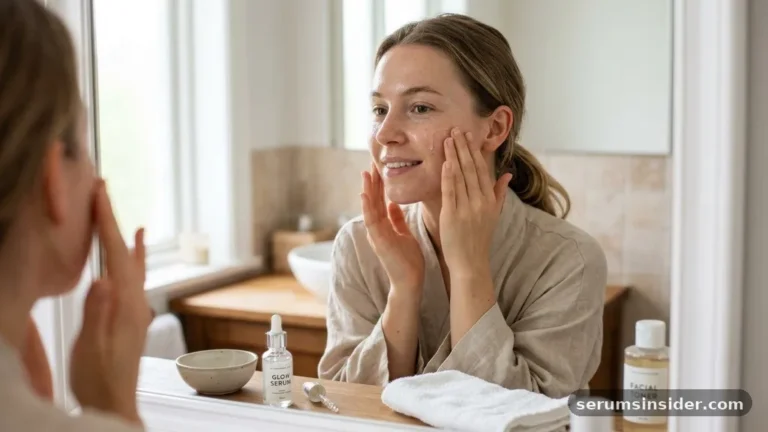
Once the skin is prepped with a toner, it is the perfect time for a serum. Serums are the workhorses of a skincare routine.
They are formulated with a smaller molecular structure, which allows them to deliver active ingredients deeper into the skin than a standard moisturizer. Whether you are using a serum for exfoliation, anti-aging, or hydration, its placement in the sequence is non-negotiable.
Because serums are designed to treat specific concerns, they need direct contact with the skin. If you apply them after your moisturizer, the occlusive nature of the cream will block the serum’s penetration. Conversely, if you apply them before your toner, you might be diluting the serum’s potency with the excess liquid of the toner.
By layering your serum directly onto the skin after the toner has been absorbed or patted in, you ensure that the active compounds—like peptides or niacinamide—can perform their functions without interference. This is why experts emphasize that the toner serum sequence is a foundational pillar of effective dermatological care.
Comparing Product Textures and Application Timing
To help visualize how these products interact, it is helpful to look at how different formulations behave on the skin surface. The following table illustrates the typical order of operations based on product consistency and function.
| Product Category | Consistency | Primary Function | Placement Order |
|---|---|---|---|
| Cleanser | Foam/Gel/Cream | Removal of debris | First |
| Toner | Watery/Liquid | pH balancing/Prep | Second |
| Serum | Gel/Lightweight | Targeted treatment | Third |
| Moisturizer | Cream/Lotion | Hydration/Barrier | Fourth |
| Sunscreen | Cream/Fluid | Protection | Final (Day) |
This hierarchy is based on the principle of permeability. Products with high water content need to be applied first because they evaporate quickly and are easily absorbed.
Products with higher oil content, such as a rich cream or a facial oil, are designed to sit on the surface to prevent water loss and provide a protective seal. If you disrupt this order, you effectively negate the benefits of your more expensive serums by preventing them from reaching their target destination.
Common Mistakes When Layering Skincare Products
Even with the best intentions, many people fall into common traps that hinder their results. One of the most frequent errors is rushing the application.
After you apply toner, it is beneficial to wait a few seconds for it to settle into the skin before moving on to your serum. If your skin is dripping wet, the serum might slide off or become diluted, reducing its efficacy.
Another common mistake involves the misuse of spot treatment products. If you are using a medicated spot treatment for acne, this should generally be applied after your serum but before your moisturizer, or sometimes directly onto clean skin depending on the product’s instructions. Always consult the American Academy of Dermatology for official guidance on managing specific skin conditions.
Additionally, mixing too many actives at once—such as layering a high-strength retinol with a harsh exfoliating serum—can lead to irritation. Keep your routine simple and consistent to allow your skin barrier to remain healthy and resilient against environmental stressors.
Addressing Topical Gaps: Essence vs. Toner vs. Serum
A frequently asked question concerns where an “essence” fits into this puzzle. An essence is a hybrid product that sits somewhere between a toner and a serum.
It is typically more hydrating than a toner but less concentrated than a serum. If you choose to incorporate an essence into your regimen, the order remains consistent: cleanse, then tone, then apply essence, then apply your serum.
Some people worry that adding too many steps will overwhelm the skin. However, the goal is not to use every product in existence, but rather to use the right products in the right sequence. If you have oily skin, you might skip a heavy moisturizer and rely on a hydrating serum to do the work.
If you have dry skin, you might layer an essence, a serum, and a cream. The “does toner or serum come first” question is ultimately about the physics of skincare: liquid-first, heavy-last. By following this structure, you ensure that your night or morning routine is as effective as possible, regardless of how many specific products you choose to include in your personal regimen.
FAQ: Common Questions About Skincare Sequences
Is it okay to skip the toner step if I am in a hurry?
Yes, toner is an optional step in many routines. While it helps balance pH and prep the skin, it is not strictly necessary for everyone. If your cleanser is gentle and pH-balanced, you can move directly from cleansing to applying your serum without compromising your results.
Can I mix my serum into my moisturizer to save time?
While this might seem efficient, it is generally not recommended. Serums are formulated to penetrate the skin, while moisturizers are formulated to sit on top. Mixing them can alter the absorption rate of the active ingredients, potentially making the serum less effective than when applied on its own.
Does the order change if I am using a prescription treatment?
Yes, prescription treatments, especially those for acne or rosacea, often have specific application instructions. Usually, these are applied to clean, dry skin. If you are using a medicated treatment, it is best to speak with your dermatologist about where it fits in your specific sequence.
Should I apply products while my skin is still wet?
For toners and essences, applying to damp skin is ideal. However, for certain actives like retinol, it is often recommended to wait until the skin is completely dry to minimize the risk of irritation. Always check the specific recommendations for your high-potency products.
In conclusion, the question of whether a toner or serum comes first is settled by the fundamental rules of skincare formulation. By prioritizing products with thinner, more watery consistencies, you create a pathway for your potent treatments to work at their best.
Remember that the ultimate goal of your skincare routine is to support your skin’s health, so prioritize consistency over complexity. Whether you use a minimalist approach or a multi-step ritual, maintaining this logical order will ensure your skin receives the full benefit of every product you apply.