
Navigating the complexities of a modern skincare routine often feels like solving a chemistry puzzle, especially when potent actives are involved. One of the most frequent points of confusion for beauty enthusiasts is determining the correct sequence for applying products, specifically whether a serum before or after retinol yields the best results.
Because retinoids are highly effective but notoriously temperamental, the order in which you layer them can dictate whether you wake up with a radiant glow or deal with unwanted irritation. Generally, the rule of thumb in dermatology is to move from the lightest consistency to the heaviest, but when it comes to high-performance treatments, understanding the specific interactions between your vitamin serum and your nighttime treatment is essential for maintaining a healthy skin barrier.
The Fundamental Principles of Skincare Layering
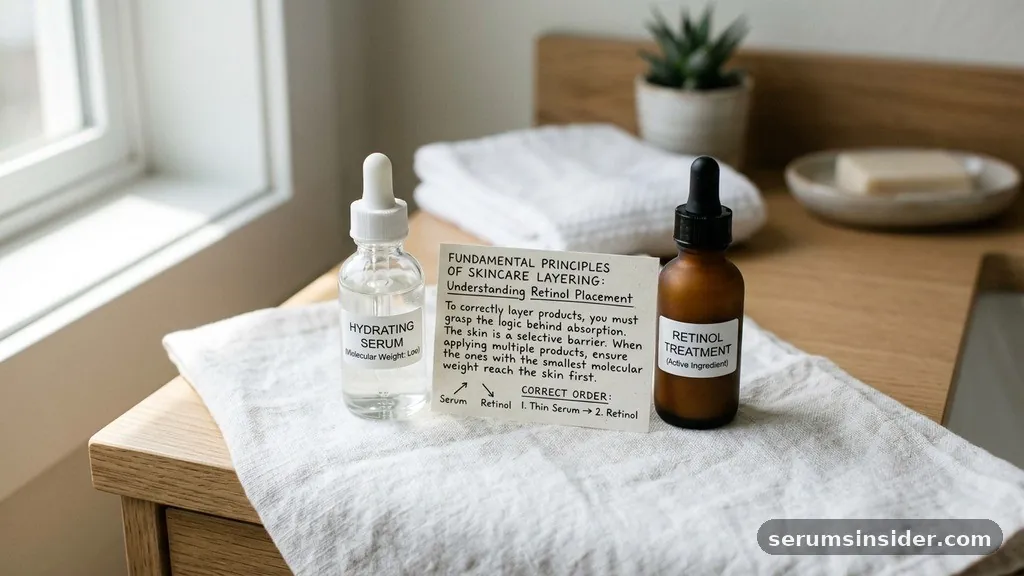
To understand the placement of retinol in your regimen, you must first grasp the logic behind product absorption. The skin is designed to be a barrier, which makes it selective about what it lets in.
When you apply multiple products, you want to ensure that the ones with the smallest molecular weight reach the skin first. Serums are typically water-based, lightweight, and designed to penetrate deeply, carrying active ingredients like hyaluronic acid or vitamin C into the dermis. If you were to place a thick, occlusive cream over your skin first, those lighter serums would struggle to pass through the oil-based barrier, rendering them less effective.
When considering if you should use a serum before or after retinol, the primary goal is to minimize the potential for inflammation while maximizing the bioavailability of the active compound. Retinoids are derivatives of Vitamin A that speed up cell turnover, but they are also known for causing initial dryness or peeling. By strategically placing a hydrating serum underneath, you create a buffer that allows the skin to tolerate the intensity of the treatment.
This method of “sandwiching” or layering is a popular technique used by dermatologists to help patients acclimate to potent products without compromising the structural integrity of the skin. Think of your routine as a foundation: the most active, treatment-focused products should sit closest to the skin, while hydrating layers act as a protective blanket.
Why Hydration Matters When Using Retinoids
The interaction between your moisturizer and your nighttime treatment is critical. If your skin is dry or compromised, the penetration of a retinoid can be too rapid, leading to what is commonly referred to as “retinization.” This process involves redness, flaking, and sensitivity.
Using a hydrating serum—especially one rich in humectants like hyaluronic acid—before your treatment helps to lock in moisture at a deeper level. This hydration acts as a reservoir, ensuring that the skin remains supple even as the retinol works to stimulate collagen production and refine texture.
Furthermore, the state of your skin’s pH balance plays a role in how these products behave. Applying a soothing serum first can help stabilize the skin’s surface, making it more resilient to the drying effects of vitamin A derivatives. If you find that your skin feels tight or uncomfortable after applying your treatment, it is a clear signal that your moisture barrier needs more support.
By adjusting the order—placing your hydrating serum before the treatment—you are essentially prioritizing skin health alongside corrective action. This approach ensures that you are not just treating signs of aging but also actively preventing the damage that can occur from harsh, improperly layered topical applications.
Step-by-Step Guide to Your Nighttime Routine
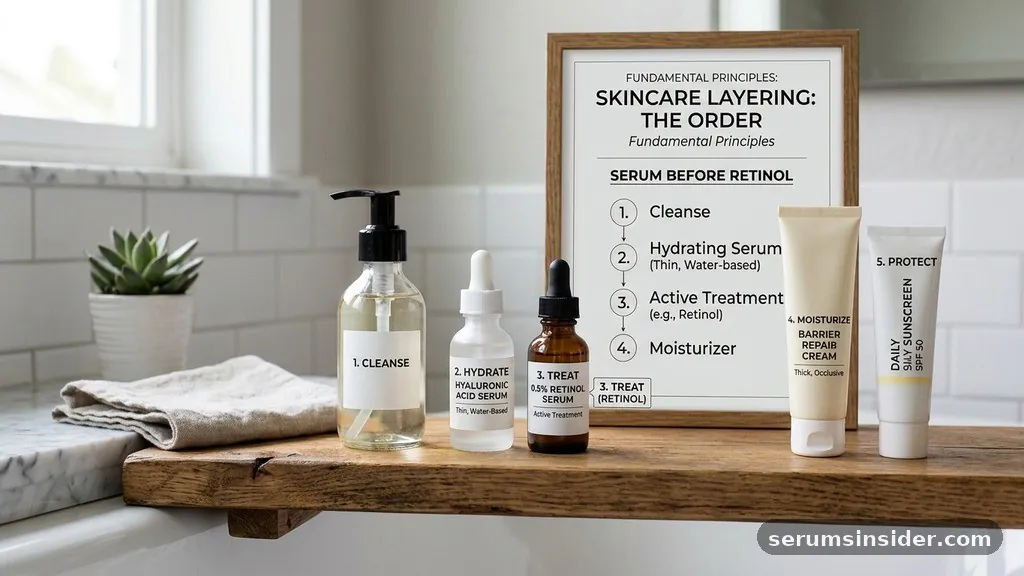
Establishing a consistent sequence is the most effective way to see long-term benefits from your skincare routine. While individual skin needs vary, the following order is widely considered the gold standard for those incorporating potent actives. Following this structure ensures that every product has the best chance to perform its specific function without interference from other layers.
- Cleansing: Always start with a clean canvas to remove dirt, oil, and pollution.
- Toning: If you use a toner, apply it now to balance the skin’s pH.
- Hydrating Serum: Apply a water-based serum like hyaluronic acid to provide a base layer of moisture.
- Retinol Treatment: Apply a pea-sized amount of your retinoid product, allowing it to absorb into the skin.
- Moisturizer: Finish with a thicker cream to seal in all previous layers and prevent transepidermal water loss.
- Eye Cream: Gently dab an eye-specific product around the orbital bone to protect the delicate skin there.
This sequence prioritizes the penetration of the active ingredients while using the subsequent layers to lock in hydration. By keeping your retinol application as the “middle” step, you allow it to work effectively while still providing the skin with the necessary support to recover from the increased cell turnover.
Comparing Layering Strategies for Different Skin Types
Not all skin reacts to retinoids in the same way. The decision to use a serum before or after retinol can be tailored to your specific skin type and tolerance levels. The table below outlines how different skin profiles might approach the layering process to minimize irritation while maximizing results.
| Skin Type | Recommended Strategy | Key Focus |
|---|---|---|
| Sensitive Skin | Serum before Retinol | Create a buffer to slow absorption and prevent inflammation. |
| Oily/Resilient Skin | Retinol before Serum | Direct contact allows for deeper, faster penetration. |
| Dry Skin | Serum (Double Layer) | Hydrate heavily both before and after the retinoid. |
| Combination Skin | Targeted Application | Apply serum first, then retinoid only on problem areas. |
For those with highly sensitive complexions, the “serum first” method is almost always the safest route. It provides a cushion that prevents the active ingredient from hitting the skin with full force immediately.
Conversely, those with thicker, more resilient skin might find that applying the treatment directly to the face yields better results, as there is no layer to impede the absorption of the molecule. Always listen to how your skin responds; if you notice persistent redness or stinging, it is time to reassess your layering technique.
Topical Gaps: Addressing Common Misconceptions
A common misconception is that mixing ingredients like vitamin C and retinol is impossible. While it is true that they can be irritating if used simultaneously, many people successfully use them by separating them into morning and evening routines. When considering the serum before or after retinol dilemma, another gap in knowledge is the role of the eye area.
The skin around the eyes is significantly thinner than the rest of the face and is often the first to show signs of aging. However, using a standard-strength retinoid too close to the lash line can lead to severe dryness.
Another often overlooked factor is the concentration of the product. A high-strength retinoid requires more respect than a low-strength derivative. When you use retinol, you are essentially forcing the skin to behave in a more youthful way, which is a high-energy process for your cells.
If you don’t provide adequate hydration, your skin may react by increasing oil production or developing a compromised barrier. Always consult the American Academy of Dermatology for official guidance on integrating these powerful treatments safely. Ensuring your routine includes a high-quality, barrier-repairing moisturizer is just as important as the active treatment itself.
Consistency and Patience in Your Skincare Journey
Achieving the results you desire from your skincare routine is a marathon, not a sprint. Whether you choose to apply your serum before or after your treatment, consistency is the ultimate variable that determines your success. Retinoids require a period of adaptation, often spanning several weeks or even months.
During this time, your skin may go through a “purge” or adjustment phase. It is vital not to increase the frequency of application or the strength of the product during this window, as this can lead to unnecessary damage.
Instead, focus on keeping your routine stable. If you have found that applying a hydrating serum first works best for your skin, stick with that method every night. Over time, your skin will build tolerance, and you may find that you can eventually apply your treatment closer to the skin without the need for a heavy buffer.
Remember that the goal is long-term health, not overnight transformation. By prioritizing hydration, respecting the order of application, and listening to the subtle cues your skin gives you, you can successfully harness the power of these advanced ingredients to achieve a smoother, clearer, and more vibrant complexion.
Frequently Asked Questions
Can I apply my moisturizer immediately after retinol?
Yes, applying a moisturizer immediately after your retinoid is recommended. This helps lock in the treatment and provides a necessary barrier to prevent dryness and irritation, ensuring your skin remains hydrated throughout the night while the active ingredients work to improve your overall texture and tone.
Should I use a vitamin C serum with my retinol?
It is generally best to avoid using vitamin C and retinol at the same time. Use vitamin C in the morning to protect against environmental damage and save your retinol for your nighttime routine to maximize the skin-repairing benefits without causing excessive sensitivity or chemical reactions.
How long should I wait between layers?
You should wait about 1 to 2 minutes between applying each product. This allows the serum to absorb into the skin, preventing it from pilling or diluting the effectiveness of your treatment. Waiting ensures each layer can properly penetrate the skin barrier before the next one is applied.
Is it normal to experience dryness when starting?
Yes, mild dryness or flaking is a common side effect when first introducing retinoids to your routine. This is known as “retinization.” To mitigate this, start by using the product only two or three times a week and ensure you are using a hydrating serum before your treatment.