Hair serum is a specialized, silicone-based styling product designed to coat the surface of your hair strands to provide a smooth, polished finish. Unlike conditioners that penetrate the hair shaft to provide deep hydration, a serum acts primarily as a protective barrier against environmental stressors, humidity, and heat damage. By filling in the gaps in the hair cuticle, it reflects light more effectively, which creates that sought-after glossy shine while simultaneously taming unruly flyaways.
If you have ever wondered what is hair serum really doing for your locks, think of it as a topcoat for your hair—much like a finishing polish for your nails or a sealant for wood. It is an essential tool for those looking to elevate their styling routine from messy to professional with just a few drops.
The Core Purpose and Function of Hair Serum
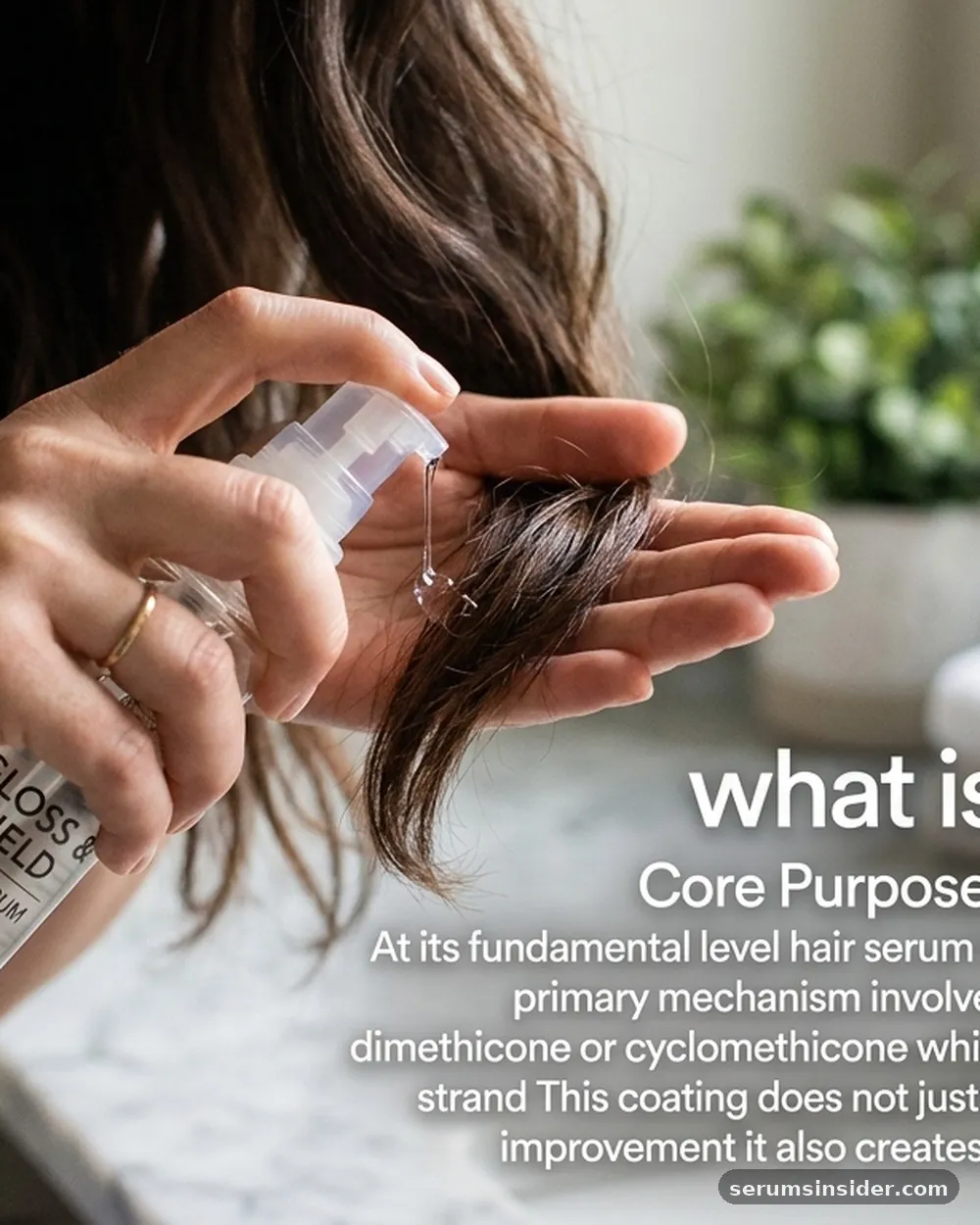
At its fundamental level, hair serum functions as a smoothing agent. The primary mechanism involves high-quality silicones—such as dimethicone or cyclomethicone—which wrap around each individual strand. This coating does not just provide an immediate aesthetic improvement; it also creates a physical shield.
When you apply serum, you are essentially sealing the cuticle layer of the hair. A flat, sealed cuticle is the secret to hair that feels soft to the touch and looks vibrant under light.
Furthermore, the product is highly effective at managing frizz. Frizz occurs when the hair cuticle is raised, allowing moisture from the air to penetrate the strand and cause it to swell. By coating the hair with a hydrophobic layer, the serum prevents atmospheric humidity from affecting the internal structure of the hair.
This makes it an indispensable asset for individuals living in humid climates or those who struggle with high-porosity hair that tends to expand throughout the day. Beyond aesthetics, the barrier also serves to protect the hair from mechanical friction, such as brushing or rubbing against clothing, which can lead to breakage over time.
Distinguishing Between Hair Serum and Hair Oil
A common point of confusion for many consumers is the difference between hair serum and hair oil. While both products are used to add shine and manageability, their chemical compositions and intended purposes are entirely distinct.
Hair oils, such as argan, jojoba, or coconut oil, are typically plant-derived and are designed to penetrate the hair shaft to provide nourishment, vitamins, and long-term moisture. They are excellent for scalp health and treating brittle ends over an extended period.
In contrast, hair serums are engineered for immediate, surface-level results. They do not “nourish” the hair in the same way an oil does; instead, they focus on cosmetic appearance and protection. Using a serum is often the final step in a styling routine, whereas oils can be used as pre-wash treatments or overnight masks.
If you apply a heavy oil to your hair before using hot tools, you might accidentally fry your strands. However, many serums are formulated with heat-protective properties, making them safer for use before blow-drying or flat-ironing. Understanding this distinction is key to building a balanced hair care regimen that addresses both long-term health and short-term styling needs.
Key Ingredients Found in Modern Hair Serums
The efficacy of a hair serum depends almost entirely on its formulation. Most commercial products rely on a blend of silicones, but premium versions often incorporate active ingredients that provide secondary benefits. Common components include hydrolyzed proteins, which can temporarily patch up microscopic tears in the hair shaft, and various vitamins like Vitamin E, which acts as an antioxidant to protect against pollution and UV rays.
Some modern formulations also include ceramides, which mimic the natural lipids found in healthy hair, helping to reinforce the structural integrity of the cuticle. When you look at the back of a bottle, you might also see botanical extracts or essential oils added for fragrance and minor conditioning benefits. However, it is important to remember that the silicones are the heavy lifters.
They provide the slip that allows a comb to glide through tangled hair without causing mechanical damage. To learn more about how specific cosmetic ingredients interact with your hair’s biology, you can consult the Food and Drug Administration’s guidance on hair care products to understand the safety standards for these topical applications.
| Feature | Hair Serum | Hair Oil |
|---|---|---|
| Primary Goal | Smoothing & Shine | Deep Nourishment |
| Absorption | Surface coating | Penetrates the shaft |
| Best For | Frizz control & styling | Dryness & scalp health |
| Heat Protection | Often included | Rarely included |
How to Apply Serum for Optimal Results
Correct application is the difference between a sleek, salon-quality look and a greasy, weighed-down mess. The most common mistake people make is applying too much product or applying it too close to the roots. Because serums are concentrated, a little goes a long way.
Start by dispensing a pea-sized amount onto your palms and rubbing them together to warm the product. This ensures an even distribution across your hands so you don’t end up with a concentrated glob on one section of your head.
Begin the application at the mid-lengths and work your way down to the ends of your hair. These areas are typically the oldest and most damaged, meaning they need the most protection and smoothing. Once you have covered the ends, you can use the remaining residue on your hands to lightly skim over the top layers to tame flyaways, but avoid the scalp entirely.
Applying serum to the roots can lead to clogged follicles and an oily appearance, which is particularly problematic for those with naturally fine or oily hair types. For those with thick or curly hair, you may need slightly more product, but always prioritize the ends.
Addressing Topical Gaps: Myths and Reality
There is a persistent myth that hair serum causes hair loss or prevents hair growth. It is important to clarify that because serums are topical products applied to the hair shaft rather than the scalp, they do not interfere with the biological process of hair growth at the follicle level. When people experience hair loss after using a product, it is almost always due to the buildup of silicones on the scalp, which can clog pores if not washed away properly.
Another misconception is that serum is only for people with straight hair. In reality, hair serum is an incredible tool for curly and wavy hair types, which are naturally more prone to dryness and frizz. By using a light, water-soluble serum, those with curls can define their pattern and keep their hair looking hydrated without the heaviness of thick oils.
The key is to select a product formulated specifically for your hair texture. For damaged hair that has been chemically processed, look for serums that explicitly mention “repair” or “bonding” properties, as these often contain amino acids that provide extra strength to fragile strands.
Integrating Serum Into Your Daily Routine
Incorporating a serum into your daily routine should be a strategic choice based on your specific hair needs. For many, the best time to use hair serum is post-wash, while the hair is still damp.
Damp hair is more porous, allowing the serum to distribute evenly and seal in some of the moisture from your conditioner. It also provides a protective layer before you introduce heat via a blow dryer.
However, serum can also be used on dry hair to add a final touch of shine or to refresh your style on day two or three. If you find your hair looking dull mid-week, a tiny drop of serum can revive the look of your ends instantly.
- Start with clean, towel-dried hair for maximum protection.
- Warm the serum in your palms to ensure smooth application.
- Focus on the ends and mid-lengths, avoiding the scalp.
- Use a wide-tooth comb to distribute the product evenly.
- Reapply a minimal amount only if necessary for flyaways.
By following this routine, you ensure that your hair remains protected from environmental factors while maintaining a healthy, vibrant appearance. Whether your goal is to reduce frizz, add shine, or simply make your daily styling easier, a well-chosen hair serum is a versatile and effective addition to any grooming kit.
Frequently Asked Questions
Is hair serum safe for daily use?
Yes, hair serum is generally safe for daily use, provided you wash your hair regularly to prevent product buildup. If you have fine hair, you might find that daily application makes your hair look flat, so start with a very small amount to see how your hair reacts.
Can I use hair serum on my scalp?
No, you should avoid applying hair serum to your scalp. Serums are designed to coat the hair shaft to provide shine and control. Applying them to the scalp can clog your hair follicles, lead to excess oiliness, and potentially cause irritation or buildup over time.
Does hair serum actually repair damaged hair?
Hair serum provides a cosmetic repair rather than a biological one. It fills in the gaps in the cuticle to make hair look and feel healthier, but it cannot “heal” a broken hair strand. For true repair, you need bond-building treatments or professional salon services.
Is it better to apply serum on wet or dry hair?
Applying serum to damp hair is generally better for heat protection and even distribution. However, applying it to dry hair is excellent for taming frizz and adding a finishing shine. Many people choose to do both: a little on damp hair, and a tiny bit more once dry.
Conclusion
Understanding what is hair serum and how it fits into your broader care regimen is essential for maintaining healthy-looking hair. By acting as a protective seal, it tames frizz, adds luster, and shields your strands from the rigors of daily styling and environmental exposure.
While it is not a cure-all for deep structural damage, its role as a finishing tool is unmatched. By selecting the right formula for your specific hair type and applying it with care, you can achieve a polished, professional look that keeps your hair feeling soft, smooth, and resilient regardless of the weather or your styling habits.