

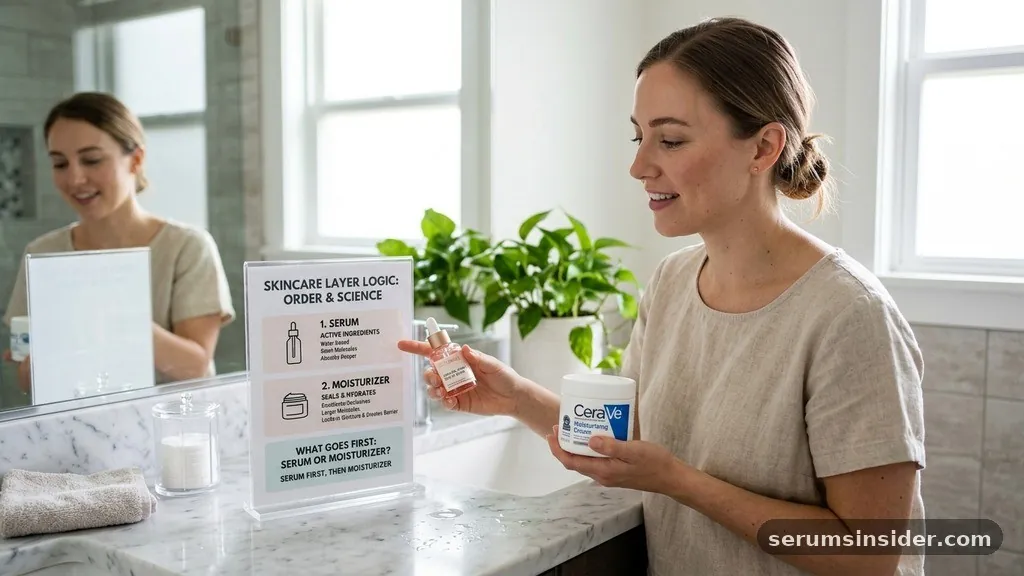
Navigating the complexities of a modern skincare routine often feels like solving a chemistry puzzle. Among the most common points of confusion for beauty enthusiasts is determining what goes first serum or moisturizer.
To achieve optimal results, you must follow the fundamental rule of skincare application: products should be layered from the thinnest, most lightweight consistency to the thickest, most occlusive texture. Because serums are typically water-based and designed to penetrate deep into the skin to deliver potent active ingredients, they must be applied directly to clean, slightly damp skin. Moisturizers, on the other hand, are formulated to seal in that hydration and protect the skin’s natural barrier, meaning they should almost always act as the final step in your treatment process before you apply sunscreen or makeup.
The Scientific Logic Behind Product Layering
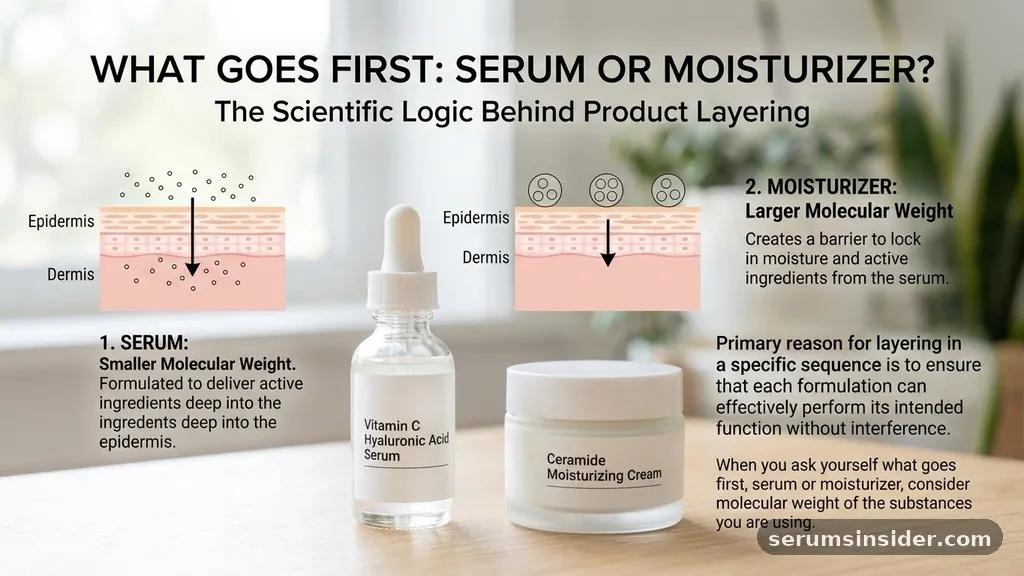
The primary reason for layering products in a specific sequence is to ensure that each formulation can effectively perform its intended function without interference. When you ask yourself what goes first serum or moisturizer, consider the molecular weight of the substances you are using. Serums are engineered with smaller molecules that allow them to bypass the surface layer of the epidermis, delivering concentrated nutrients directly to the deeper layers where they can address specific concerns like hyperpigmentation, fine lines, or dehydration. If you were to apply a heavy cream or a thick lotion before your serum, those large molecules would create a physical barrier on the skin’s surface, effectively blocking the thinner serum from penetrating.
By applying your face serum immediately after cleansing and toning, you ensure that the active components—such as Vitamin C, niacinamide, or hyaluronic acid—reach their target destination. Once these ingredients have been absorbed, the moisturizer serves to lock them in, preventing transepidermal water loss. This method of application maximizes the efficacy of your skincare products and ensures that you are getting the most value out of your investment.
Ignoring this order often leads to “pilling,” where products clump together on the skin, or a lack of visible results because the active ingredients never actually reached the cells they were meant to treat. Understanding this flow is essential for anyone serious about their long-term skin health.
Understanding the Role of Serums in Your Routine
To master your skincare routine, it is helpful to view serums as the “treatment” phase of your regimen. Unlike a standard moisturizer, which is primarily focused on hydration and barrier support, a serum is a specialized tool. These products are often highly concentrated, containing a higher percentage of potent actives per drop.
Because they are designed for targeted delivery, they are usually water-based or gel-like in texture. This lightweight consistency is what dictates their position in the correct order of operations.
When you apply a serum, you are essentially feeding your skin the specific nutrients it needs to repair or protect itself. Whether you are using a brightening serum to combat dark spots or a peptide serum to support collagen production, the goal is direct contact with the skin surface. If you use a moisturizer first, the oil-based components in the cream can prevent the water-based serum from absorbing.
Furthermore, if you are layering multiple serums, always start with the thinnest one and work your way up to the slightly thicker ones. This systematic approach ensures that each layer is fully absorbed, preventing the skin from feeling overwhelmed or greasy. For more detailed information on how skin absorption works, you can visit the American Academy of Dermatology, which provides evidence-based insights into maintaining healthy skin.
How Moisturizers Seal and Protect the Skin Barrier
Once the treatment phase is complete, the moisturizer takes center stage. Its role is twofold: it provides essential hydration to the surface layers of the skin, and it creates an occlusive seal that protects the skin from environmental stressors.
The skin’s natural barrier is a delicate ecosystem of lipids and proteins that keeps moisture in and irritants out. By using a moisturizer as the final step in your care products sequence, you are reinforcing this barrier.
Some moisturizers are humectants, which draw water into the skin, while others are emollients or occlusives that soften the skin and physically trap moisture. Because these products are designed to stay on the surface to provide long-lasting protection, they are inherently thicker and more viscous than serums. If you try to use a serum after a thick cream, the serum will simply sit on top of the cream, unable to reach the skin.
This not only wastes your expensive serum but can also lead to clogged pores or a sensation of heaviness. By prioritizing the moisturizer as the final step, you ensure that the skin remains supple, hydrated, and resilient throughout the day.
Comparing Serum and Moisturizer Characteristics
To make the distinction between these two essential skincare products even clearer, it helps to look at their physical properties and primary purposes. The table below outlines the fundamental differences that dictate why the correct order is so vital for your daily regimen.
| Feature | Serum | Moisturizer |
|---|---|---|
| Primary Goal | Targeted treatment/actives | Hydration and barrier protection |
| Texture | Lightweight, liquid, or gel | Creamy, lotion, or balm |
| Penetration | Deep into the epidermis | Surface and upper layers |
| Application Order | First (after cleansing) | Second (to lock in) |
This comparison highlights why applying a serum after a moisturizer is physically counterproductive. The molecular weight of a serum is specifically engineered for absorption, while the formulation of a moisturizer is engineered for surface-level occlusion. Following this logic consistently ensures that your skin receives the maximum benefits from every product in your cabinet.
The Role of Face Oil and Where It Fits
A common point of confusion arises when introducing a face oil into the routine. Many people wonder if an oil should be used as a serum or as a moisturizer.
In truth, a face oil is generally considered an occlusive agent, similar to a moisturizer, but it acts differently because it provides lipids rather than water-based hydration. If you are using a serum moisturizer combination along with a face oil, the oil should almost always be the final step.
Because oils are heavy and hydrophobic, they can block almost anything applied after them. If you apply oil before your moisturizer, you might prevent the moisturizer from effectively hydrating the skin. However, some people prefer to mix a few drops of oil into their moisturizer to create a custom blend.
This is a perfectly acceptable way to use your products, as it combines the moisturizing and occlusive steps into one. Regardless of how you choose to incorporate oil, the golden rule remains: keep your water-based, active-heavy serums closest to the skin, and your oil-based or cream-based products as the final protective layer. This prevents irritation caused by improper layering and ensures your skin feels comfortable rather than congested.
Common Mistakes and How to Fix Them
Even with the best intentions, it is easy to fall into bad habits. Many people apply products in a rush, leading to poor absorption or the wrong sequence. One of the most frequent errors is not waiting long enough between steps.
While you don’t need to wait for each product to dry completely, giving your serum about 30 to 60 seconds to “sink in” before applying your moisturizer can significantly improve results. This short pause allows the volatile components of the serum to evaporate or absorb, leaving behind the active ingredients ready to be sealed in by your cream.
Another mistake is using too many active ingredients at once. If you are using multiple serums, you might be causing unnecessary irritation to your skin. A regular routine should be balanced.
Focus on one or two key goals, such as hydration or brightening, rather than trying to layer five different serums in the morning. Overloading the skin can compromise the barrier, leading to redness and sensitivity. If you notice your skin looking dull or feeling tight despite your efforts, you may be using products that are not compatible with your skin type or layering them in a way that causes conflict.
Always observe how your skin reacts to the products you apply. If you feel stinging or notice persistent dryness, step back and simplify your routine to the basics: a gentle cleanser, a targeted serum, and a hydrating moisturizer.
Frequently Asked Questions
Can I mix my serum and moisturizer together?
Yes, mixing a few drops of your serum into your moisturizer is a common technique, especially if you have sensitive skin. This can help dilute the potency of the active ingredients, potentially reducing the risk of irritation while still providing the benefits of both products simultaneously.
Does the order change for morning versus evening routines?
The fundamental rule of applying the lightest product first remains the same regardless of the time of day. In the morning, you will follow your serum and moisturizer with sunscreen. In the evening, you might add a thicker night cream or facial oil as the final step.
What happens if I accidentally apply moisturizer before serum?
If you apply moisturizer first, the thick, occlusive ingredients will likely create a barrier that prevents the serum from penetrating the skin. While your skin will still be hydrated, you will effectively render the expensive active ingredients in your serum useless, as they will sit on the surface and eventually wash off.
Do I need a serum if I have a good moisturizer?
While a high-quality moisturizer is essential for barrier health, a serum is often necessary if you have specific concerns like acne, dark spots, or deep wrinkles. Moisturizers are generally designed for hydration, whereas serums are designed to deliver concentrated treatments that a standard cream simply cannot provide.
Conclusion
Mastering the sequence of your skincare regimen is the most effective way to ensure that your products perform as promised. By adhering to the rule of applying your lightweight, active-packed serums first and your thicker, protective moisturizers second, you allow each layer to serve its specific purpose. This creates a synergistic effect that nurtures your skin’s health, prevents unnecessary waste, and minimizes the risk of product pilling or irritation.
Whether you are building a complex multi-step routine or sticking to the essentials, keeping this order in mind will help you achieve the best possible results. Remember that consistency is key; by applying your products in the correct order every day, you are setting the foundation for long-term skin vitality and a healthy, radiant complexion.


