Achieving a healthy, glowing complexion is often less about the sheer volume of products in your cabinet and more about the precision of your application. The confusion surrounding whether to apply moisturizer or serum first is a common hurdle for many enthusiasts trying to build an effective skincare routine.
Understanding the molecular weight and function of your products is the key to unlocking their full potential. By following the correct order, you ensure that your skin receives the maximum benefit from every drop of liquid gold and every dollop of cream, preventing product pilling and ensuring optimal absorption.
The Science of Product Absorption and Molecular Weight
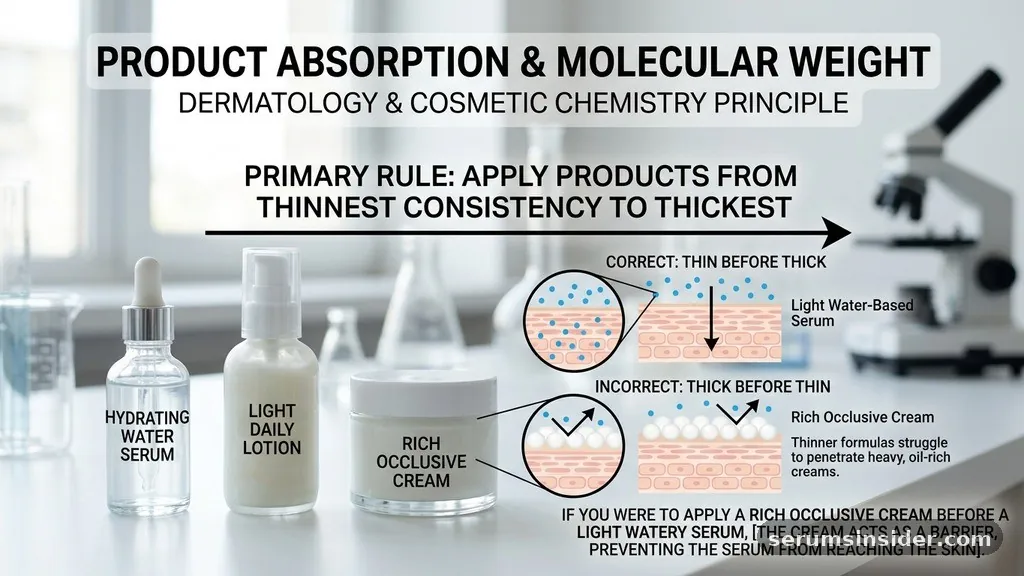
The primary rule in dermatology and cosmetic chemistry is to apply products from the thinnest consistency to the thickest. This principle exists because thinner, water-based formulas struggle to penetrate through heavy, oil-rich creams. If you were to apply a rich, occlusive cream before a light, watery serum, the cream would essentially act as a physical barrier, blocking the smaller molecules of the serum from reaching the deeper layers of the epidermis.
Serums are intentionally formulated with a smaller molecular structure, allowing them to deliver active ingredients—such as hyaluronic acid, vitamin C, or peptides—directly into the skin. When you apply serum onto clean, slightly damp skin, you are creating a direct pathway for these potent actives to perform their specific tasks. Once the serum has absorbed, your moisturizer enters the picture to seal everything in.
Moisturizers are typically formulated with emollients and occlusives that sit on the surface to prevent transepidermal water loss. By placing your moisturizer as the final step in your treatment phase, you lock in the hydration and the active ingredients provided by the serum, essentially creating a protective shield for your complexion.
Why Consistency Determines the Correct Order
When you consider the difference between a face serum and a moisturizer, it helps to think about their individual roles in maintaining the skin’s health. A serum is designed to treat specific concerns—such as hyperpigmentation, fine lines, or dehydration—while a moisturizer is designed to nourish and protect the barrier.
If you reverse this order, you dilute the efficacy of your treatment. Imagine trying to soak a sponge in water while it is already coated in a thick layer of wax; the water will simply bead off rather than soaking in.
This logic holds true for almost every category of topical treatment. Whether you are using a vitamin serum or a targeted chemical exfoliant, these products should always be the first items to touch your skin after cleansing.
You want these high-concentration formulas to have direct contact with your pores. Once they have been given about 60 seconds to sink in, your moisturizer can be applied to provide the necessary lipids and hydration to keep the skin supple and protected against environmental stressors throughout the day or night.
Comparing Skincare Product Roles
To help visualize how different products function within your daily regimen, the following table breaks down the core characteristics of common skincare staples.
| Product Type | Primary Function | Consistency | Application Order |
|---|---|---|---|
| Cleanser | Remove debris and oil | Water/Gel/Foam | First |
| Face Serum | Target specific concerns | Thin/Watery | Second |
| Moisturizer | Lock in hydration | Cream/Lotion | Third |
| Face Oil | Seal and nourish | Viscous/Lipid | Last |
The Role of Occlusives and Emollients
Many people struggle with the placement of face oil within their sequence. Because oils have a very high molecular weight, they are the most occlusive products you can use. If you apply an oil before your water-based serum or moisturizer, you are effectively preventing any subsequent products from penetrating.
This is why oils should almost always be the final step in your evening routine. By the time you reach the oil stage, your skin has already been treated with actives and hydrated with a cream. The oil then acts as a final sealant to prevent moisture evaporation.
Understanding the American Academy of Dermatology guidelines on basic skincare routines confirms that simplicity and consistency are more important than complex layering. When you apply your products in the correct order, you help the skin maintain its natural barrier function.
If you find that your skin feels tight or dry even after applying a cream, it is likely that your serum is not being allowed to do its job, or your moisturizer is not heavy enough to hold the moisture provided by the serum. Adjusting the order is a simple, cost-free fix that can drastically change the efficacy of your current stash of products.
Common Mistakes When Layering Skincare
One of the most frequent errors people make is rushing the application process. Even if you know that the serum moisturizer order is the standard, applying them back-to-back without allowing for absorption can lead to pilling.
Pilling occurs when the polymers in your products interact poorly, or when the skin is saturated and cannot accept more layers. To avoid this, allow each layer to become slightly tacky or fully dry before moving on to the next.
Another mistake is using too many products at once. When you layer five different serums, you increase the likelihood of irritation and decrease the likelihood that any of them will actually penetrate the skin. A focused, minimal routine is often more effective than a cluttered one.
If you have multiple concerns, consider alternating your serums between morning and night. For example, use your antioxidant-rich vitamin serum in the morning to protect against free radicals, and save your hydrating or exfoliating treatments for your evening routine. This ensures that you aren’t overwhelming your face with competing ingredients while still addressing all your skin’s needs.
Maximizing Results Through Proper Technique
* Start with a gentle cleanser to ensure a clean canvas for your active ingredients.
* Apply your serum while the skin is still slightly damp to enhance absorption.
* Wait at least one minute between layers to allow for proper penetration.
* Use a pressing motion with your palms rather than rubbing to avoid tugging on delicate tissues.
* Finish with an SPF during the day to protect the progress you have made with your treatments.
* Listen to your skin; if you experience redness or burning, scale back the number of active products you are using.
When you follow these steps, you are not just applying products; you are building a system that works in harmony with your skin’s biology. The power of a good routine lies in the synergy between the products. When the serum delivers the actives and the moisturizer traps the hydration, your skin is better equipped to repair itself and maintain a healthy glow.
Addressing Topical Gaps: Why Texture and Finish Matter
A common question is whether the texture of the product should override the general rule of thumb. Generally, the answer is no. Even if a serum feels slightly “silky” or “heavy,” it is almost always formulated with a higher water content and lower lipid content than a traditional cream.
If you are ever unsure, check the ingredient list. If water (Aqua) is the first ingredient, it is likely a serum or essence and should be applied before a product that lists oils, waxes, or heavy butters as primary ingredients.
Furthermore, consider the environment. If you live in a very humid climate, you might find that you can skip the heavy cream and rely solely on a hydrating serum.
Conversely, in dry or winter conditions, you may need to layer a serum, a cream, and then a light face oil to keep your barrier intact. The “correct” order remains the same (thin to thick), but the volume of product you apply can and should shift based on your environment and your skin’s immediate feedback.
FAQ: Common Queries About Skincare Order
Does it matter if I use a serum or moisturizer first at night?
Yes, the order remains the same regardless of the time of day. You should always apply your serum first to allow the active ingredients to penetrate the skin, followed by your moisturizer to lock in the hydration and prevent evaporation while you sleep.
Can I mix my serum and moisturizer together to save time?
While it is technically possible to mix them, it is generally discouraged. Mixing can alter the pH of the serum, potentially making the active ingredients less effective or causing them to irritate the skin. It is best to apply them as separate, distinct layers for maximum efficacy.
How long should I wait between applying my serum and my moisturizer?
A good rule of thumb is to wait about 60 seconds. You don’t need to wait until your skin is bone-dry, but you want the serum to be absorbed enough that it no longer feels wet to the touch. This prevents the products from sliding around or pilling.
What if I use a face oil as well?
Face oils should almost always be the final step in your routine. Because oils are lipophilic and highly occlusive, applying them before a water-based serum or moisturizer would create a barrier that prevents the other products from reaching your skin.
In summary, the debate of moisturizer or serum first is settled by the simple logic of molecular weight and product consistency. By prioritizing thinner, water-based serums to treat your skin and following up with thicker, cream-based moisturizers to protect it, you create a balanced and effective routine.
Respecting this order ensures that your skincare products are working for you, not against you, helping you achieve a healthier, more radiant complexion over time. Remember that consistency and patience are the ultimate tools for long-term skin health.