
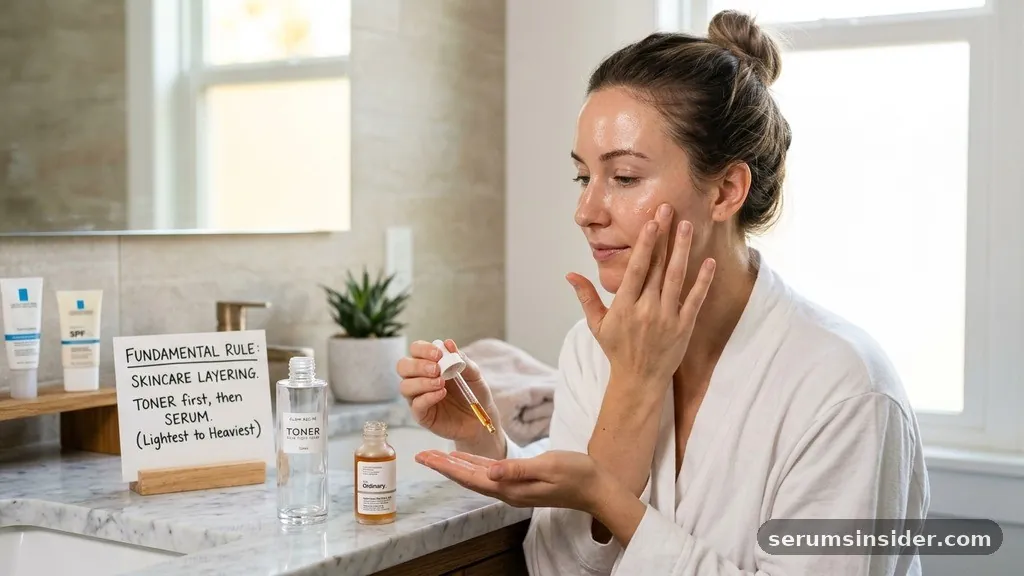
Navigating the nuances of a daily regimen can feel like solving a complex puzzle, especially when you are trying to determine if you should apply your serum before or after toner. The short answer, which aligns with the standard practice in dermatology, is that you should almost always apply your toner first.
Toners are designed to balance the pH of your skin and remove any residual impurities left behind after cleansing, acting as a primer for the more potent treatments that follow. By applying a toner while your complexion is still slightly damp, you create a receptive canvas that allows your active ingredients to penetrate more effectively.
Understanding the logic behind this sequence is vital for anyone looking to maximize the efficacy of their skincare products. If you apply a thick, treatment-heavy liquid before a watery toner, you risk creating a barrier that prevents the toner from reaching your pores.
Conversely, applying a toner first ensures that your skin‘s moisture barrier is prepped and ready to absorb the concentrated nutrients found in your chosen treatment. Whether you are using a brightening vitamin C serum or a soothing hyaluronic acid blend, the order of operations remains a cornerstone of effective dermatological care.
The Fundamental Rule of Skincare Layering
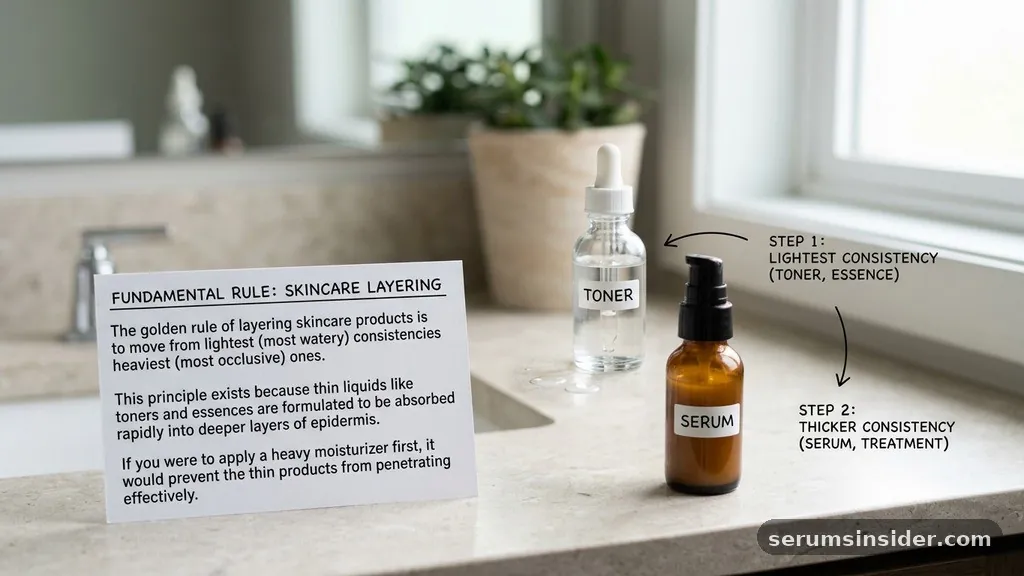
The golden rule of layering skincare products is to move from the lightest, most watery consistencies to the heaviest, most occlusive ones. This principle exists because thin liquids, like toners and essences, are formulated to be absorbed rapidly into the deeper layers of the epidermis.
If you were to apply a heavy moisturizer or a thick facial oil first, the smaller, more refined molecules in your toner or serum would be blocked by the larger, oil-based molecules of the heavier product. This creates a physical bottleneck, rendering your expensive treatments significantly less effective.
When you ask whether you should use a serum before or after toner, the answer is rooted in the molecular weight of the substances. A toner is essentially a delivery system that provides a quick burst of hydration and adjusts the skin’s pH levels back to an acidic state—typically between 4.5 and 5.5—which is where the skin barrier functions best.
Once the toner has been pressed into the skin, the surface is perfectly primed to accept the high-potency actives found in a serum. Think of your toner as the “wetting agent” that makes the skin more permeable, allowing the serum to glide on smoothly and sink in without pilling or leaving a tacky residue.
How Toner Prepares the Skin for Active Ingredients
Many people underestimate the role of toners in a modern skincare routine. In the past, many toners were alcohol-based astringents that stripped the face of its natural oils, but today’s formulations are vastly different.
Modern toners are often packed with humectants like glycerin or soothing botanicals that provide an immediate layer of moisture. By applying serum immediately after your toner has been absorbed—or even while your face is still slightly damp—you are essentially “trapping” that extra moisture within the skin.
This process is particularly important if you are using high-performance ingredients like retinol or exfoliating acids. These ingredients can sometimes be irritating if applied directly to dry, freshly cleansed skin. By providing a cushion of hydration through a toner, you minimize the risk of redness or flaking while still ensuring the active ingredients reach their target.
This layering technique is a favorite among skincare enthusiasts who prioritize the health of their moisture barrier. For more information on how different products interact with the skin’s surface, you can consult the American Academy of Dermatology for official guidance on basic skin health.
The Role of Essences and Why They Matter
In the debate between serum before or after toner, it is helpful to consider where an essence fits into the mix. An essence is often considered a hybrid between a toner and a serum. It is typically thinner than a serum but more concentrated than a traditional toner.
If your routine includes an essence, the general order of application should be: cleanser, toner, essence, then serum. This gradual increase in viscosity ensures that each layer is fully absorbed before the next one is introduced.
Many people find that they love the added layer of hydration an essence provides, especially in drier climates. If you are using a product from a brand like Biossance, which often features squalane-based formulas, you will find that these products are designed to be highly compatible with other layers.
The key is to wait a few seconds between steps. You do not need to wait until your face is bone-dry; in fact, allowing the skin to remain slightly damp can actually help the product spread more evenly and absorb more deeply, reducing the amount of product you need to use per application.
Common Mistakes When Layering Skincare
One of the most frequent mistakes people make is applying their products in the wrong order due to confusion about product types. For instance, some people treat an oil-based serum as a moisturizer, applying it too early in the routine.
If you are using an oil-based serum, it should almost always be the final step before your sunscreen (in the morning) or your night cream (in the evening). Applying an oil too early will effectively seal your skin, preventing any subsequent water-based products from penetrating.
Another common error is using too much product. When you layer multiple items, a little goes a long way. If you apply a thick layer of toner followed by a thick layer of serum, you will likely end up with a sticky film that never truly absorbs.
Instead, focus on patting the products into the skin using your fingertips. This gentle motion helps stimulate circulation and encourages the ingredients to settle into the skin rather than sitting on top of it. Remember, the goal of your new routine should be to support your skin’s natural functions, not to overwhelm it with excessive layers.
Comparison of Skincare Product Viscosity
To visualize why the order matters, consider the following table which breaks down common skincare categories by their typical texture and recommended application sequence.
| Product Category | Typical Texture | Application Order |
|---|---|---|
| Cleanser | Gel/Cream/Oil | First |
| Toner | Watery/Thin | Second |
| Serum/Essence | Viscous/Concentrated | Third |
| Moisturizer | Cream/Lotion | Fourth |
| Sunscreen/Oil | Occlusive/Protective | Last |
By following this sequence, you ensure that the lighter, water-soluble ingredients are not blocked by the heavier, oil-soluble ones. This creates a logical flow that respects the chemistry of your products.
Addressing Topical Gaps: When to Deviate from the Rules
While the “thinnest to thickest” rule is a reliable standard, there are exceptions. For example, if you are using a specialized treatment serum that contains a very high concentration of an active ingredient—such as a prescription-strength retinoid—a dermatologist might suggest applying it directly to dry, clean skin to maximize its potency. In this specific scenario, the “toner first” rule might be bypassed to ensure the medication is not diluted or buffered by other layers.
Additionally, some people find that their skin reacts better to a “damp-skin application” method, where they apply their serum while the skin is still wet from washing, skipping toner entirely. This is perfectly acceptable if your cleanser is pH-balanced and does not leave your skin feeling tight or stripped. Ultimately, your skincare routine should be a reflection of your skin’s individual needs.
If you find that your skin feels dehydrated by midday, you might need to add an extra layer of hydration like a toner or essence. If your skin feels greasy, you might need to simplify your routine to avoid over-layering.
Frequently Asked Questions
Does the order of serum and toner change between morning and night?
Generally, no. The principle of applying the thinnest product first remains consistent regardless of the time of day. Whether you are prepping your face for the day or setting it up for overnight repair, the goal is always to move from watery, pH-balancing products to more concentrated, nourishing treatments.
Can I mix my serum and toner together to save time?
It is not recommended to mix them in your palm before application. Each product is formulated with a specific delivery system and pH level. Mixing them can destabilize the ingredients, potentially causing them to lose their efficacy or react in a way that causes irritation on your skin.
What if my toner is actually an exfoliating acid?
If your toner contains AHA or BHA acids, it acts as both a pH balancer and an exfoliant. You should still apply it first to allow the acids to work directly on the skin. Wait for it to fully absorb—usually about one minute—before applying your serum to avoid potential stinging.
Is it necessary to use a toner at all?
A toner is not strictly mandatory if your cleanser is gentle and pH-balanced. However, many people find that using a toner provides an essential boost of hydration and acts as a beneficial intermediary step that makes the rest of their skincare products perform better throughout the day.
In conclusion, determining whether to use your serum before or after toner is a matter of respecting the chemistry of your products. By consistently applying your toner first, you prepare your skin to receive the concentrated benefits of your serum, leading to better absorption and more visible results.
Keep your routine simple, observe how your skin reacts to different layering techniques, and remember that consistency is the most important factor in achieving long-term skin health. Whether you are a skincare minimalist or a dedicated enthusiast, understanding the logic behind the order of your products will help you get the most out of every bottle.