
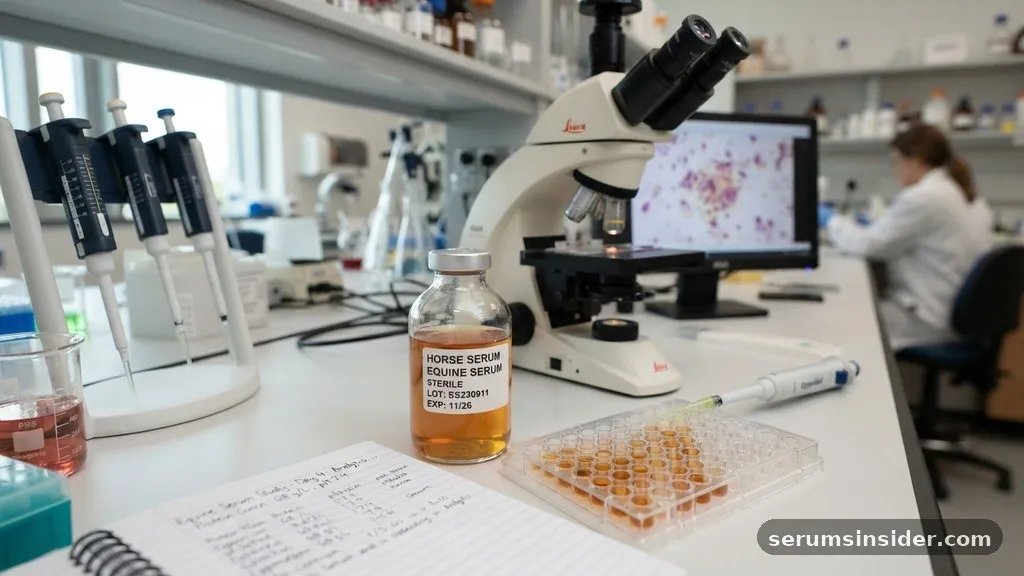
Horse serum is a complex biological fluid derived from the blood of horses, widely utilized in scientific research and diagnostic applications. It consists of the liquid portion of equine blood after the coagulation process has removed clotting factors and cells.
Because it is rich in essential proteins, hormones, and growth factors, it serves as a critical supplement in various laboratory environments, particularly when researchers need to support the viability and proliferation of delicate biological samples. Unlike whole blood, which contains cellular components like red and white blood cells, the serum is a clarified, nutrient-dense medium that provides the necessary chemical environment for cells to thrive outside of a living organism.
The Biological Composition of Equine Serum
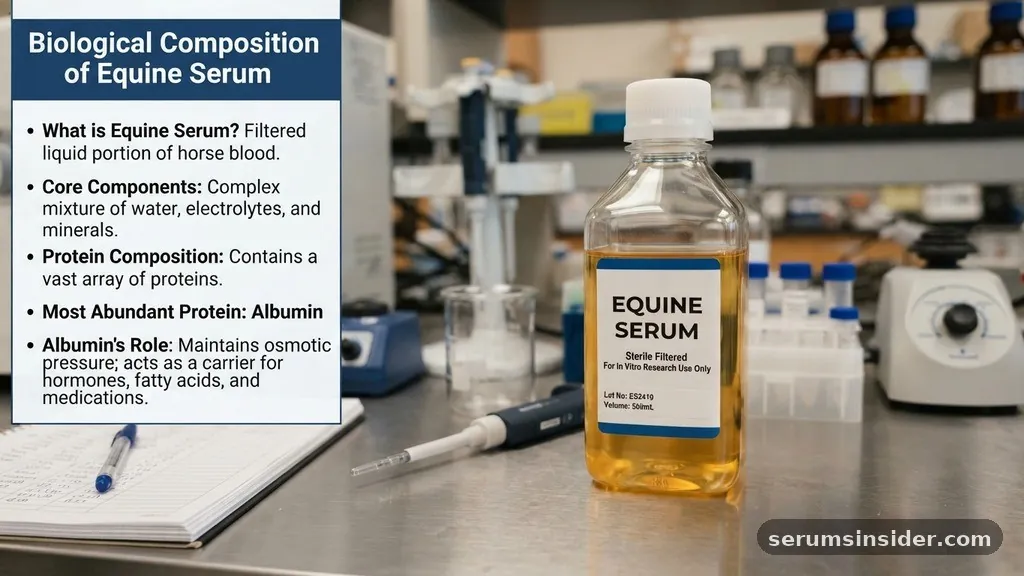
At its core, horse serum is a sophisticated mixture of water, electrolytes, minerals, and a vast array of proteins. The most abundant protein found in this substance is albumin, which plays a vital role in maintaining osmotic pressure and acting as a carrier molecule for various hormones, fatty acids, and medications within the bloodstream.
Beyond albumin, the serum contains a diverse profile of globulins, including immunoglobulins that provide natural immunity. These components make it a potent biological resource for maintaining homeostasis in artificial environments.
The chemical profile of this fluid is highly dependent on the health and diet of the donor horse. When processed for laboratory use, the blood is collected under strictly controlled conditions to ensure the absence of contaminants. Once the blood clots, it is centrifuged to separate the solid clot from the liquid layer.
This resulting product is then typically filtered to remove any remaining particulates, resulting in a sterile, golden-yellow liquid. Because it contains specific growth-promoting factors, it is often used as an alternative or a secondary additive to other common media supplements, providing a unique set of nutrients that differ from those found in other animal-derived serums.
Horse Serum in Cell Culture Applications
In the field of cell culture, researchers rely on serum to provide the “x-factor” required for cells to transition from a dormant state to active growth. While synthetic media can provide basic glucose and salts, they often lack the complex signaling molecules found in natural serum.
Horse serum is specifically prized for its role in supporting the growth of specialized cell lines, including neurons, primary muscle cells, and certain types of lymphocytes. It is often chosen for experiments where the high protein content of bovine serum might be either too potent or otherwise unsuitable for the specific metabolic requirements of the target cells.
The use of this serum is particularly prevalent in studies involving differentiation. When scientists want to encourage stem cells or progenitor cells to develop into a specific tissue type, such as skeletal muscle, the specific hormonal balance of horse serum can act as a trigger.
By carefully adjusting the concentration of the serum in the growth medium, researchers can “fine-tune” the environment to favor specific developmental pathways. This precision makes it an indispensable tool in regenerative medicine research, where the goal is to observe how cells react to internal and external stimuli in a highly regulated, various laboratory setting.
Comparing Equine and Fetal Bovine Serum
A frequent point of discussion in laboratory management is the comparison between horse serum and fetal bovine (FBS). While FBS is the industry standard for general cell proliferation due to its exceptionally high concentration of growth factors, it is also significantly more expensive and subject to supply chain volatility.
Horse serum serves as a more cost-effective and sometimes more chemically appropriate alternative for specific applications. Many researchers find that for certain cell types, the “lower” concentration of growth-promoting hormones in horse serum actually results in better control over the experiment, preventing unwanted over-proliferation.
The following table highlights the primary differences between these two common laboratory supplements to help researchers decide which is appropriate for their specific use:
| Feature | Horse Serum | Fetal Bovine Serum |
|---|---|---|
| Growth Factor Content | Moderate | Very High |
| Primary Application | Differentiation & Specific Lines | General Proliferation |
| Cost | Generally Lower | High |
| Consistency | High (Adult Donor) | Variable (Fetal Source) |
Clinical and Diagnostic Roles
Beyond the petri dish, horse serum has a storied history in clinical medicine, particularly regarding the treatment and prevention of diseases. Historically, it was used to create antitoxins for conditions like diphtheria and tetanus.
By hyper-immunizing horses with specific antigens, scientists could harvest the antibody-rich serum, which could then be administered to a human patient to provide immediate, passive immunity. While modern biotechnology has largely replaced this with recombinant humanized antibodies, the fundamental principle of using equine-derived proteins remains a cornerstone of immunological testing and diagnostic assay development.
Today, horse serum is frequently used as a blocking agent in immunohistochemistry and ELISA assays. Because it contains a high concentration of proteins that can bind to non-specific sites on a membrane or tissue sample, it prevents “background noise” during diagnostic procedures.
This ensures that when a researcher or clinician is looking for a specific marker or pathogen, the signal is clear and not obscured by random protein-protein interactions. In this capacity, the serum acts as a molecular “buffer” that keeps the diagnostic environment clean and reliable, ensuring accurate data collection for medical research.
Addressing Topical Gaps and Quality Control
A common question among researchers is how to handle the variability between batches. Since every animal has a unique physiological profile, every lot of serum can exhibit slight variations in hormone and protein levels. Top-tier suppliers address this by implementing rigorous testing protocols.
They screen for adventitious agents, such as viruses or mycoplasma, and perform standardized growth assays to ensure the product meets quality benchmarks. Researchers are encouraged to reserve a large enough quantity of a single validated lot to cover the duration of their entire study to maintain consistency.
The Role of Heat Inactivation
One critical process often applied to horse serum is heat inactivation. By heating the serum to approximately 56 degrees Celsius for 30 minutes, scientists can effectively deactivate the complement system—a group of proteins that could otherwise cause cell lysis or interfere with specific experimental outcomes. This process is essential when using the serum in immunological assays where the complement proteins would create unwanted reactions. For those interested in the technical standards of serum processing, the National Center for Biotechnology Information provides extensive documentation on the biochemical properties and standardization of animal-derived reagents.
Safety and Ethical Considerations
The collection of horse serum is subject to stringent animal welfare regulations. Ethical sourcing is not just a moral imperative but a scientific one; healthy, well-cared-for animals produce higher-quality plasma and serum, free from the stress-induced hormones that can contaminate the product.
Facilities that prioritize the welfare of their horses ensure that blood draws are performed by skilled veterinarians under sterile conditions, with recovery periods that allow the animals to thrive. This commitment to quality and ethics ensures that the final product remains a viable, high-performance tool for modern science.
Furthermore, when handling these products in the laboratory, researchers must treat them as potentially biohazardous materials. Even though the serum is usually processed and filtered, it is still a biological derivative and should be managed according to standard laboratory safety protocols.
Proper storage, typically at -20 degrees Celsius, is vital to prevent the degradation of heat-sensitive proteins. By adhering to these best practices, the scientific community can continue to leverage the power of equine serum to make breakthroughs in medicine, biotechnology, and cellular biology for years to come.
Frequently Asked Questions
What is the primary difference between horse serum and fetal bovine serum?
Fetal bovine serum is richer in growth factors, making it ideal for rapid cell division. Horse serum is often used for specific cell lines or when researchers need to induce differentiation, providing a more controlled, lower-hormone environment that is often more cost-effective for long-term studies.
Why is horse serum heat-inactivated before use?
Heat inactivation is performed to deactivate the complement system, a series of proteins that can cause cell death or interfere with specific immunological assays. Heating the serum to 56 degrees Celsius for 30 minutes ensures these proteins are neutralized without destroying essential growth factors.
Is horse serum used in human medical treatments?
While it was historically used to create antitoxins for diseases like tetanus, modern medicine primarily uses it in laboratory diagnostics and research. Today, most human treatments rely on synthetic, monoclonal, or humanized antibodies rather than direct injections of equine-derived serum to avoid allergic reactions.
How should horse serum be stored to maintain quality?
To maintain the integrity of the proteins and growth factors, horse serum should be stored at -20 degrees Celsius or lower. Once thawed, it should be kept at 4 degrees Celsius and used within a few weeks, avoiding repeated freeze-thaw cycles which can degrade the product.