
Learning how to effectively use serums can make a skincare routine more purposeful without making it unnecessarily complicated. A serum is usually a lightweight product containing a concentrated blend of active ingredients, so the right formula can help address concerns such as dehydration, acne, dullness, uneven tone, fine lines, or visible sun damage.
However, results depend on more than choosing a popular ingredient. You also need to apply serum in the correct order, use an appropriate amount, introduce stronger formulas gradually, and follow with products that support the skin barrier. This approach helps your face serum work effectively while reducing the risk of dryness, irritation, or unnecessary product conflicts.
What a Serum Does and Why Application Matters
Face serums are typically formulated with a higher concentration of selected ingredients than many basic cleansers or moisturizers. Their textures may be watery, gel-like, milky, or slightly oily, but most are designed to spread easily and absorb relatively quickly. Depending on the product, a serum may deliver humectants that attract water, antioxidants that help defend against environmental stress, exfoliating acids that loosen dead skin cells, or retinoids that encourage smoother-looking skin over time.
The word “serum” does not automatically guarantee that a product is powerful or suitable for every person. Two serums can have entirely different purposes.
A hyaluronic acid serum mainly supports hydration, while a salicylic acid formula may help unclog pores. A vitamin C product is often selected for antioxidant support and a brighter appearance, whereas retinol is commonly used to improve the look of fine lines, uneven texture, and blemishes.
Application affects how comfortably these ingredients perform. Applying too much can leave the skin sticky, cause pilling beneath sunscreen, or increase irritation without improving results. Using several strong products in the same routine may weaken the skin barrier and create redness that makes it difficult to judge whether any serum is helping.
Effective use begins with matching the formula to your main concern. If your skin feels tight and flaky, a hydrating serum may be a sensible first step.
If clogged pores are the priority, an acne-focused formula may be more relevant. People with persistent inflammation, severe acne, or a suspected skin condition should consider advice from a dermatologist rather than relying entirely on over-the-counter skincare.
How to Apply Face Serum in the Correct Order
The proper order of a routine generally moves from the lightest water-based products to heavier creams and oils. A simple morning sequence is cleanser, toner or essence if desired, serum, moisturizer, and broad-spectrum sunscreen. At night, the order may be cleanser, treatment serum, moisturizer, and any facial oil used as the final sealing step.
A practical application sequence

- Cleanse first. Remove sunscreen, makeup, excess oil, and daily debris with a gentle cleanser. Clean skin allows the serum to spread evenly rather than mixing with a layer of buildup.
- Pat, rather than aggressively rub, the face dry. Some hydrating products work well on slightly damp skin, while stronger acids and retinol are often better tolerated on completely dry skin.
- Apply one serum at a time. Use a small amount, usually two or three drops for the face, unless the label gives different instructions.
- Press and smooth gently. Distribute the product over the face and, if appropriate, the neck. Avoid vigorous rubbing, especially around the eyes.
- Allow a short settling period. You do not need to wait for a long time, but giving the serum a moment to absorb can reduce pilling.
- Follow with moisturizer. Moisturizer supports the skin barrier and can reduce the dryness associated with certain active ingredients.
- Finish with sunscreen in the morning. This is particularly important when using exfoliating acids or retinol, as unprotected ultraviolet exposure can worsen irritation and pigmentation.
Serum generally comes before moisturizer because its lighter texture is intended to contact the skin directly. Moisturizer does not necessarily stop a serum from working, but applying a rich cream first can make it harder for a lightweight formula to spread evenly. There are exceptions: people with sensitive skin may apply moisturizer before retinol to create a buffer, sometimes called the sandwich method.
Do not assume that every product must be layered immediately. If a serum remains wet or tacky, wait briefly before the next step. When products repeatedly roll into small flakes, the problem may be using too much, rubbing too hard, or combining incompatible textures rather than poor absorption.
Choosing Ingredients for Your Skin’s Main Concern
The best serum is the one that addresses a realistic goal and suits your skin’s tolerance. Instead of buying several formulas based on trend-driven claims, choose one priority and use it consistently. Skin usually responds more predictably to a simple routine than to frequent changes.
Hydration and a weakened barrier

For dehydration, look for ingredients such as glycerin, hyaluronic acid, panthenol, beta-glucan, or ceramides. These ingredients can help the skin hold water and feel more comfortable, but a hydrating serum should normally be followed by moisturizer. Without an emollient or occlusive layer, water can evaporate from the surface, particularly in dry indoor environments.
Acne and congestion

Salicylic acid is a common choice for oily or congested skin because it can move into oil-filled pores and help loosen buildup. Niacinamide may help support the barrier, reduce the appearance of excess oil, and calm the look of redness.
These ingredients can be useful, but more is not always better. Begin with a lower-strength product and avoid applying it to cracked, peeling, or actively irritated skin.
Dullness and uneven tone

Vitamin C serums are valued for antioxidant properties and may help improve the appearance of uneven tone when used consistently. Other brightening ingredients include azelaic acid, licorice-derived compounds, tranexamic acid, and niacinamide. Changes in pigmentation take time, and daily sunscreen is essential; otherwise, ultraviolet exposure can continue to trigger the very discoloration you are trying to improve.
Fine lines and texture
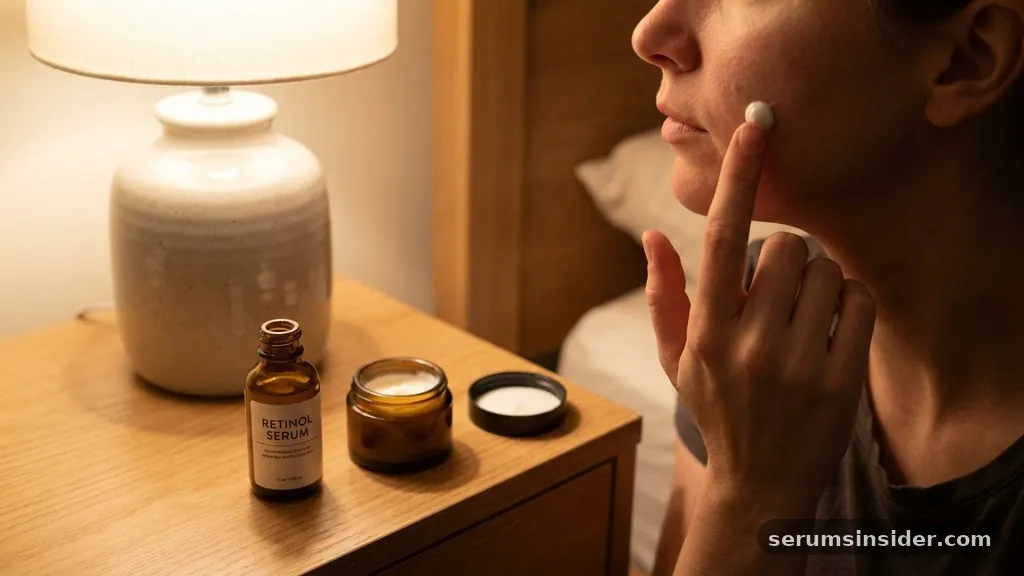
Retinol and other retinoids are among the most researched topical ingredients for improving the appearance of fine lines and uneven texture. They can also help some people with acne.
Start by applying a pea-sized amount to dry skin two nights per week, then increase slowly if your skin remains comfortable. Retinoids can cause dryness and sensitivity at first, so moisturizer is an important part of the routine.
Read the full label and follow its directions rather than relying only on general advice. Concentrations, packaging, pH, and supporting ingredients all influence how a product behaves. A product from a reputable manufacturer, with clear usage instructions and appropriate safety testing, is generally preferable to an unverified formula with exaggerated promises.
Using Serums in the Morning and at Night
Whether a serum belongs in the morning or evening depends on its ingredients, your schedule, and how your skin responds. There is no universal rule that every serum must be used at night. Hydrating products can be used at either time, while antioxidant formulas are often convenient in the morning because they complement sunscreen and help support the skin against daily environmental exposure.
A morning routine might include a gentle cleanser, a vitamin C or hydrating serum, moisturizer, and sunscreen. Apply sunscreen generously as the last skincare step, and reapply it during prolonged outdoor exposure. A brightening serum cannot compensate for inconsistent sun protection, so sunscreen is one of the most valuable parts of any routine targeting dark spots or premature-looking aging.
Nighttime is often preferred for retinol because some retinoid products are sensitive to light and because their use can make skin more vulnerable to irritation. An evening routine can also be a good time for a richer moisturizer, allowing the skin to remain comfortable while it recovers from daily exposure. If you use an exfoliating acid at night, begin with one or two evenings per week rather than using it every night immediately.
Some combinations should be approached cautiously. Using retinol and a strong exfoliating acid together may be too irritating for many people.
Similarly, layering several vitamin C, acid, or acne treatments can cause stinging and peeling. You may use different active ingredients on alternate nights instead: for example, retinol on Tuesday and Thursday, an exfoliating acid on Saturday, and hydration-focused care on the remaining nights.
Pregnant or breastfeeding individuals should ask a qualified healthcare professional which ingredients are appropriate, particularly before using retinoids. If a product causes persistent burning, swelling, hives, or intense redness, stop using it and seek professional advice rather than trying to push through the reaction.
How to Layer Multiple Serums Without Irritating Skin
Using more than one serum is not automatically wrong, but each additional product increases the chance of irritation, pilling, or confusion about what is causing a reaction. If you want to layer formulas, start with the thinnest texture and apply only a small amount of each. Give each product a brief opportunity to settle before adding the next one.
A low-risk combination might be a hydrating serum followed by a niacinamide serum and moisturizer. Hydration can make treatment products feel more comfortable, while niacinamide is generally compatible with many routines. Even with relatively gentle ingredients, introduce one new product at a time so you can identify its effects.
Strong actives require more planning. For example, using salicylic acid, glycolic acid, retinol, and a high-strength vitamin C product in one routine may create unnecessary stress for the skin. The issue is not always a dangerous chemical interaction; often, the combined exfoliation and dryness simply exceed what the barrier can tolerate.
Signs that your routine contains too much
- Persistent stinging when applying otherwise gentle products
- Redness that does not settle after a short period
- New patches of flaking or tightness
- Small irritated bumps or worsening sensitivity
- Skin that feels unusually hot, raw, or uncomfortable
If these symptoms appear, simplify the routine. Use a gentle cleanser, a bland moisturizer, and sunscreen during the day while pausing strong active ingredients. Once the skin feels normal again, reintroduce only one treatment product gradually. “More effective” does not mean “more concentrated” or “more frequent”; consistent use at a tolerable level usually produces better long-term results.
Common Serum Mistakes and Better Habits
One common mistake is applying a full dropper to the face. A dropper is packaging, not a dosage instruction.
Many formulas need only two or three drops, while thicker products may require a slightly different amount. Follow the label, spread the product carefully, and avoid wasting excess formula on the hands if the manufacturer recommends a smaller quantity.
Another mistake is applying serum directly onto unwashed skin. Sweat, makeup, sunscreen, and oil can interfere with even application.
Cleansing does not need to leave the face squeaky or tight; a harsh cleanser may make active ingredients more irritating. Choose a gentle wash and avoid scrubbing the skin before applying a treatment.
Some people expect immediate results and change products every few days. Hydration may look better quickly, but concerns such as acne, fine lines, or uneven pigmentation often need several weeks of steady use. Take occasional photographs in similar lighting if you want to assess progress more objectively, and do not judge a product based on a single application unless it causes a clear adverse reaction.
Skipping sunscreen is another major error, especially when using retinol or exfoliating acids. Sun exposure can worsen dark marks and contribute to visible skin damage, undermining the purpose of a carefully selected serum. Apply a broad-spectrum sunscreen every morning and use protective clothing or shade when spending extended time outdoors.
Finally, do not ignore storage. Some vitamin C formulas can oxidize when exposed to heat, air, or light.
Keep products closed, store them according to the label, and observe changes in smell, colour, or texture. A formula that has significantly changed should not be used merely because there is still product left in the bottle.
How to Use a Serum on the Face, Hair, and Sensitive Areas
Face serum should be applied with clean hands rather than directly touching the dropper to the skin. Contact between the dropper and your face can transfer oil, bacteria, or residue back into the bottle. Dispense the recommended amount into your palm or onto clean fingertips, then apply it evenly across the cheeks, forehead, chin, and neck when the product is intended for those areas.
Avoid the eyelids and immediate eye area unless the product is specifically made for it. The skin around the eyes is delicate, and ingredients that are comfortable on the cheeks may cause watering or irritation there. Be particularly cautious with retinol, exfoliating acids, fragrance, and essential oils.
Hair serums are different from face serums and should not automatically be substituted for one another. A hair serum may contain silicones, oils, conditioning agents, or heat-protective ingredients designed for the hair shaft.
Apply it to damp or dry lengths and ends according to the label, keeping heavy products away from the scalp if they make the hair greasy. A product intended for hair does not necessarily provide benefits for facial skin.
Patch testing is a useful precaution when trying a new formula, especially if you have sensitive skin or a history of allergies. Apply a small amount to an inconspicuous area, such as the side of the neck or inner arm, and observe it over the period recommended by the product maker. A patch test cannot guarantee that your face will not react, but it can identify some immediate sensitivity before you use the product more broadly.
If you are uncertain about ingredient combinations, have persistent acne, or experience repeated reactions, consult a dermatologist or another appropriately certified healthcare professional. Product customer service can help clarify directions, ingredient lists, storage, and manufacturing details, but it cannot replace medical diagnosis or individualized treatment.
Building a Simple Routine That Produces Consistent Results
An effective serum routine does not need many steps. In the morning, cleanse if needed, apply one suitable serum, use moisturizer if your skin requires it, and finish with sunscreen.
At night, cleanse, apply one treatment serum, and use moisturizer. This basic structure is easier to maintain and makes it simpler to evaluate whether a product is helping.
Introduce new formulas slowly. Use a gentle hydrating serum daily if it agrees with your skin, but start retinol or exfoliating acids only once or twice per week.
Increase frequency in small steps after several weeks of comfortable use. If your skin becomes dry or irritated, reduce use rather than adding more products to correct the problem.
Think of skincare as a long-term process rather than a quick fix. Ingredients need regular application, appropriate storage, and protection from environmental damage to show their potential benefits. A modest routine that you follow consistently is usually more effective than an elaborate collection of products used unpredictably.
The most useful question is not simply, “Which serum is best?” It is, “Which ingredient addresses my current concern, and can I use it comfortably and consistently?” Once you answer that, apply a small amount after cleansing, follow with moisturizer, protect your skin during the day, and give the routine enough time to work before making major changes.