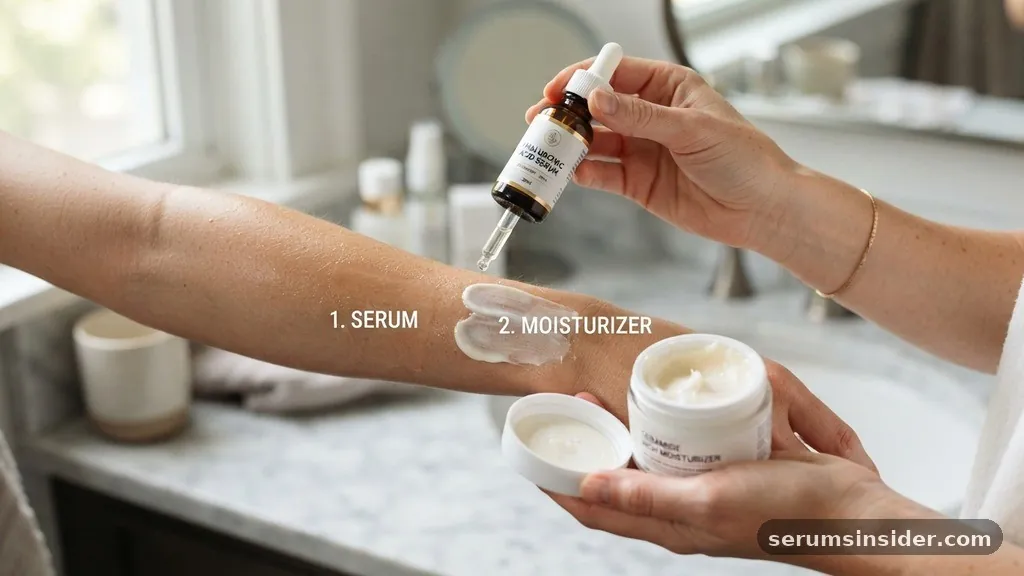
Navigating the complexities of a modern skincare routine can feel like solving a chemistry puzzle, especially when you are trying to determine what goes on first serum or moisturizer. Achieving healthy, glowing skin relies not just on the quality of your care products, but on the sequence in which you apply them.
Because these formulas have different molecular weights, viscosities, and specific purposes, following the wrong order can prevent your skin from absorbing the most potent benefits. As a general rule of thumb, you should always apply products from the thinnest consistency to the thickest, which places serums firmly before moisturizers in your daily regimen.
The Science Behind Product Layering
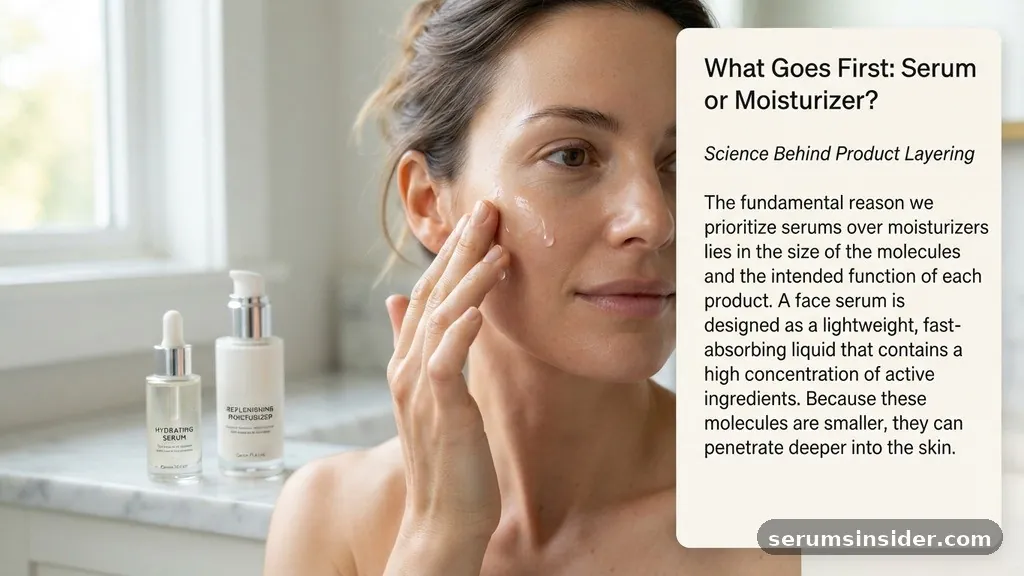
The fundamental reason we prioritize serums over moisturizers lies in the size of the molecules and the intended function of each product. A face serum is designed as a lightweight, fast-absorbing liquid that contains a high concentration of active ingredients.
Because these molecules are smaller, they can penetrate deeper into the epidermis to target specific concerns like hyperpigmentation, fine lines, or dehydration. If you were to apply a heavy cream or lotion first, the thick occlusive barrier created by the moisturizer would physically block the serum from reaching the deeper layers of the skin.
When you apply serum directly to clean, slightly damp skin, you allow those concentrated nutrients to get to work immediately. Think of your skin like a sponge; if it is already saturated with a heavy, oily layer, it cannot absorb the lighter, water-based treatments that follow. Furthermore, moisturizers are typically formulated with larger molecules and emollient properties that serve a different purpose: sealing in moisture and protecting the skin barrier from environmental stressors.
By reversing this step, you essentially waste your high-performance treatments, as they end up sitting on top of the moisturizer rather than performing their intended function beneath it. Understanding this basic physical principle is the cornerstone of an effective care routine.
Understanding Serum Formulation and Absorption
To truly master your skincare routine, you must understand that serums are the workhorses of your vanity. They are often water-based or gel-like, allowing for rapid absorption. When you are using these products, you are delivering targeted therapy to the skin.
Whether it is vitamin C for brightening, hyaluronic acid for plumping, or niacinamide for oil control, these active ingredients need a clear path to the skin cells. If you apply a moisturizer first, you create an impenetrable shield that prevents these delicate compounds from working effectively.
Many people wonder if there is an exception to this rule. Generally, the only time you might deviate is if you are using a specific, highly irritating product that requires a “buffer.” However, for 99% of users, the serum before moisturizer rule holds firm.
When you apply your serum, you should gently pat it into the skin rather than rubbing it vigorously. This helps improve blood circulation and ensures an even distribution across the face and neck. Once the serum feels slightly tacky but mostly absorbed, you are ready for the next phase.
This timing is crucial; you do not need to wait for the skin to be bone-dry, but it should not be dripping wet either, as this can dilute the efficacy of the products. For more detailed information on how these ingredients interact with the skin barrier, you can consult the American Academy of Dermatology guidelines.
The Role of Moisturizers in Your Routine
If serums are the treatment, moisturizers are the protection. Their primary job is to act as an occlusive agent, locking in the hydration provided by your serums and preventing transepidermal water loss.
A good cream or lotion contains emollients and humectants that soften the skin and strengthen its natural barrier. By applying the moisturizer last, you essentially “seal” everything you have applied previously, including your serums and toners.
This is why the sequence of your care products is so critical. A moisturizer is meant to be the final layer before you apply sunscreen or makeup. If you were to apply a serum on top of a heavy moisturizer, the serum would likely pill, ball up, or simply sit on the surface of your skin, leading to a greasy feeling and zero benefits.
Furthermore, moisturizers often contain larger molecules that provide a smooth, aesthetic finish to the skin. By following the correct order, you ensure that your face feels comfortable, hydrated, and protected throughout the day. This layering technique is essential for maintaining the health of your moisture barrier, which is your skin’s first line of defense against pollution and bacteria.
Comparing Product Textures and Application
When deciding what goes on first serum or moisturizer, it helps to visualize the density of the products. A helpful way to remember the sequence is to think of it as a pyramid: start with the thinnest, most watery substance and build up to the thickest, most protective substance.
| Product Type | Consistency | Placement in Routine |
|---|---|---|
| Cleanser | Water/Foam | First |
| Toner/Essence | Liquid | Second |
| Face Serum | Gel/Light Liquid | Third |
| Moisturizer/Cream | Lotion/Butter | Fourth |
| Sunscreen/Oil | Heavy/Protective | Last |
As demonstrated in the table above, the order is determined by viscosity. If you have multiple serums, you should layer them from thinnest to thickest as well.
For example, a watery vitamin C serum should go on before a thicker, more viscous hyaluronic acid serum. Following this sequence ensures that every product has the opportunity to penetrate the skin and deliver its intended benefits without interference from subsequent layers.
Addressing Potential Skin Irritation
One of the most common concerns regarding the correct application of care products is the potential for irritation. This is particularly relevant when using powerful active ingredients like retinoids or high-strength chemical exfoliants.
In these specific cases, some dermatologists might suggest the “sandwich method.” This involves applying a thin layer of moisturizer, followed by your potent retinoids, and then another layer of moisturizer.
This approach is an exception to the general rule and is used specifically to mitigate the side effects of harsh ingredients. However, for your regular, non-irritating serums—like antioxidants, peptides, or hydrating boosters—you should always stick to the traditional order. If you find that your skin reacts poorly to a serum, the issue is likely the concentration of the product itself, not necessarily the layering sequence.
When introducing new active ingredients to your care routine, it is always a good idea to perform a patch test on your inner forearm before applying the product to your face. This prevents widespread redness or sensitivity and allows you to gauge how your skin responds to the formulation.
Integrating Face Oils and Sunscreen
A common point of confusion arises when face oil is introduced into the mix. Because oils are lipophilic (fat-loving) and have a very large molecular structure, they are almost always the last step in your morning or evening routine, even after your moisturizer. While you might be tempted to mix your oil into your moisturizer, applying it as a final “sealant” is generally more effective.
- Cleanse your skin thoroughly to remove impurities.
- Apply water-based toners or essences.
- Layer your face serum, starting from the thinnest formula.
- Apply your moisturizer to lock in the hydration.
- Finish with a face oil if your skin is particularly dry.
- Always apply SPF as the final step during your morning routine.
Sunscreen is the absolute final step of your daytime skincare routine. Never mix your sunscreen with your moisturizer or serum, as this can dilute the formula and compromise the UV protection. By keeping your routine organized, you ensure that every product you invest in can actually help your skin look and feel its best.
FAQ: Common Skincare Questions
Does it matter if I wait between applying serum and moisturizer?
It is generally recommended to wait about 60 seconds after applying your serum before moving on to your moisturizer. This short pause allows the serum to absorb into the skin, ensuring it doesn’t get pushed around or diluted when you apply the heavier cream on top.
Can I mix my serum and moisturizer together in my palm?
While it might save time, mixing them is generally not advised. Serums are formulated to penetrate the skin, while moisturizers are designed to sit on top. Mixing them can alter the pH and absorption rate of the active ingredients, potentially making your expensive treatments less effective.
What if I use multiple serums in my routine?
When using multiple serums, apply them in order of thinnest to thickest consistency. For example, apply a watery vitamin C serum first, let it absorb, then apply a thicker, gel-based hyaluronic acid serum. This ensures that the lighter formulas are not blocked by the heavier ones.
Do I need to change my order for morning versus night?
The fundamental rule—serum before moisturizer—applies to both morning and night. The only difference is the type of products you use. In the morning, focus on antioxidants and protection, while in the evening, you can incorporate more restorative treatments like retinoids or intensive night creams.
In conclusion, knowing what goes on first serum or moisturizer is the key to maximizing the efficacy of your beauty regimen. By respecting the molecular structure of your products and layering them from thinnest to thickest, you ensure that your skin receives the full benefit of every drop.
Consistency and the correct order are the most powerful tools in your arsenal for achieving healthy, radiant skin. Whether you are dealing with dryness, aging, or sensitivity, following these basic principles will elevate your care routine and provide the results you are looking for.