
Mastering the art of skincare requires more than just buying expensive products; it demands a precise strategy for how you layer them. Learning how to apply face serum correctly is the single most effective way to ensure your skin absorbs the potent active ingredients tucked inside those tiny bottles.
Because serums are formulated with smaller molecular structures than a typical moisturizer or cream, they are designed to penetrate deeper into the epidermis, delivering hydration, antioxidants, or brightening agents exactly where they are needed most. If you have been splashing on products haphazardly, you are likely wasting money and missing out on the transformative potential of your skincare regimen.
The Importance of Preparation Before Application
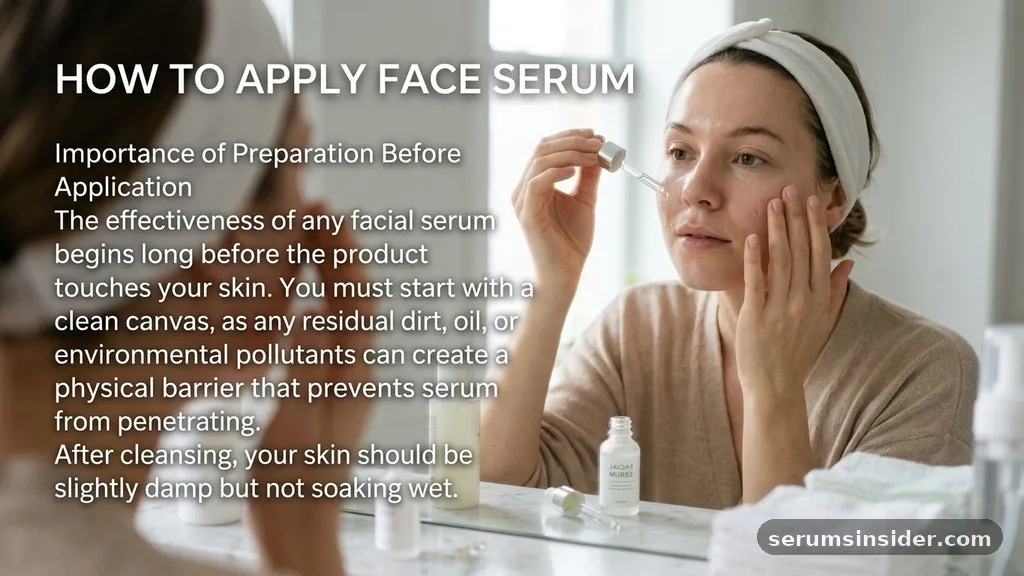
The effectiveness of any facial serum begins long before the product touches your skin. You must start with a clean canvas, as any residual dirt, oil, or environmental pollutants can create a physical barrier that prevents the serum from penetrating. After cleansing, your skin should be slightly damp but not soaking wet. This is a critical step that many people overlook.
When the skin is slightly moist, it acts like a sponge, drawing the product deeper into the pores. If you apply your serum to bone-dry skin, you might find that it evaporates before it has a chance to work.
Furthermore, preparation involves choosing the right cleanser that respects your skin’s barrier. Avoid harsh, stripping soaps that leave your face feeling tight or “squeaky clean,” as this indicates that the natural oils have been compromised. Once you have gently patted your face dry with a clean towel—never rub, as this causes micro-tears—you are ready to move on.
Think of this phase as priming a wall for paint; the cleaner and more balanced the surface, the better the final result will look. If you use a toner, apply it immediately after cleansing to balance your pH levels, then move directly to your serum while the skin remains receptive.
The Correct Technique for Applying Serum
When you are ready to apply serum, precision is key. You do not need to drown your face in the product. Because serums are concentrated, a little goes a long way.
Use the dropper to dispense three to five drops into the palm of your hand. Instead of rubbing the product between your palms—which causes the serum to absorb into your hands rather than your face—use your fingertips to gently tap the liquid onto your skin. Start at the center of your face and work your way outward, ensuring even coverage across your cheeks, forehead, chin, and nose.
Do not forget the face neck and neck collet areas. Many people focus exclusively on the face, but the skin on your neck and chest often shows signs of aging first. Gently press the product into these areas using upward, sweeping motions.
This helps with lymphatic drainage and prevents the skin from being pulled downward, which can contribute to sagging over time. The “press and pat” method is far superior to aggressive rubbing, as it encourages blood flow and ensures the product settles into the skin barrier without causing unnecessary irritation or redness.
Layering Strategies: The Order of Operations
One of the most common questions regarding skincare is how to layer products effectively. The rule of thumb is to apply products from the thinnest consistency to the thickest. Your face serum should almost always come first after cleansing and toning, followed by your moisturizer.
The moisturizer serves as a “sealant,” locking in the hydration and the active ingredients provided by the serum. If you apply a heavy cream before your serum, the serum will likely sit on top of the cream, unable to reach the deeper layers of the epidermis where it can do the most work.
To help you visualize this, consider the following hierarchy of application:
- Step 1: Cleanser (Removes impurities)
- Step 2: Toner (Balances pH levels)
- Step 3: Face Serum (Delivers concentrated actives)
- Step 4: Eye Cream (Protects delicate skin)
- Step 5: Moisturizer (Seals in hydration)
- Step 6: Sunscreen (Essential for day use)
This sequence ensures that every product has the opportunity to perform its specific function. By adhering to this order, you maximize the efficiency of your routine.
According to the American Academy of Dermatology, maintaining a consistent, simple routine is far more effective than using a high volume of products sporadically. Always allow each layer to sink in for about 30 to 60 seconds before moving to the next.
Morning vs. Evening Application Rituals
The timing of your application significantly influences the type of serum you should choose. During the morning, your primary goal is protection. You want to use products that defend your skin against environmental aggressors like UV rays and pollution.
A vitamin C serum is the gold standard for daytime, as it provides potent antioxidant benefits and helps brighten the complexion. When you apply face serum in the morning, follow it up with a broad-spectrum sunscreen to ensure that the active ingredients are not neutralized by sun exposure.
In the evening, your skin enters a state of repair. This is the perfect time to incorporate serums that focus on cellular turnover and deep restoration. Ingredients like retinol, peptides, or exfoliating acids (like AHAs or BHAs) are best suited for night use.
Because these ingredients can make your skin more sensitive to sunlight, applying them before bed allows them to work overnight without the risk of UV damage. By splitting your serums into day and night categories, you can address multiple skin concerns—like dark spots during the day and fine lines at night—without overwhelming your skin barrier.
Comparing Serum Ingredients and Their Benefits
Not all serums are created equal, and understanding what is in your bottle is essential for success. Some serums are designed for deep hydration, while others are targeted at specific concerns like hyperpigmentation or acne. The following table outlines common ingredients and how they function within a balanced routine.
| Ingredient | Primary Benefit | Best Time to Use |
|---|---|---|
| Hyaluronic Acid | Intense Hydration | Morning & Night |
| Vitamin C | Brightening/Protection | Morning |
| Retinol | Anti-Aging/Renewal | Night Only |
| Niacinamide | Oil Control/Texture | Morning & Night |
When selecting a serum, look for high-quality formulations that offer clear benefits. For example, hyaluronic acid is a humectant, meaning it draws moisture from the air into your skin. To get the most out of it, always apply it to damp skin.
If you are struggling with dullness, a Vitamin C derivative can provide that coveted radiance, effectively evening out your skin tone over time. The key is to introduce new serums one at a time to ensure your skin tolerates them well before adding more complexity to your regimen.
Common Mistakes and How to Avoid Them
Even the most dedicated skincare enthusiasts can fall into traps that hinder their progress. The most frequent error is applying too much product. Because serums are highly concentrated, using a full dropper or multiple pumps is unnecessary and can lead to pilling—where the product balls up on the skin when you apply your moisturizer.
Stick to the recommended amount, which is usually just a few drops. Another common mistake is neglecting the waiting period. If you rush through your routine, the products will mix together on the surface of your skin rather than absorbing individually, reducing their potency.
Furthermore, many people fail to check the before after results consistently. Skincare is a marathon, not a sprint. It often takes six to eight weeks of daily use to see significant changes in skin texture or tone.
If you are not seeing results within a week, do not immediately discard the product. Give your skin time to adjust to the active ingredients. Finally, ensure you are storing your serums correctly.
Many potent ingredients, especially Vitamin C, are light-sensitive and can oxidize if kept in direct sunlight. Store your bottles in a cool, dark place to maintain their efficacy for as long as possible.
Addressing Topical Gaps: The Consistency Factor
A common gap in skincare advice is the failure to address the “why” behind consistency. Why does it matter if you skip a night? The skin operates on a biological clock, and consistency trains your skin to maintain its barrier function.
When you skip days, your skin loses the cumulative benefit of the active ingredients. Furthermore, the environment plays a huge role in how your skin behaves.
If you live in a dry climate, you might need a heavier moisturizer on top of your serum to prevent trans-epidermal water loss. If you live in a humid environment, you might find that a lightweight serum is enough on its own.
Another gap is the lack of information regarding skin purging. When you start using a new, effective serum, you might notice a temporary breakout. This is often “purging,” where the skin is accelerating its cell turnover process, bringing underlying congestion to the surface.
Many people mistake this for a negative reaction and stop using the product immediately. Understanding the difference between a breakout (caused by a clogged pore or irritation) and purging (a natural process of the skin) is vital for long-term success. If you are unsure, consult with a dermatologist to ensure your skincare path is safe and effective.
Frequently Asked Questions
Can I use more than one serum at a time?
Yes, you can layer serums, but keep it simple. Start with the thinnest, most water-based formula and allow it to absorb fully before moving to the next. Avoid layering too many actives, such as retinol and strong acids, at the same time to prevent irritation.
Do I really need a moisturizer if I use a serum?
Yes. While serums provide deep treatment, most are not designed to replace the barrier-protecting properties of a moisturizer. A moisturizer seals the serum into your skin and prevents moisture from evaporating, ensuring your face stays hydrated and protected throughout the day or night.
How do I know if a serum is working for my skin?
Look for gradual improvements in texture, brightness, or hydration levels over six to eight weeks. If you notice persistent redness, itching, or stinging, your skin may be reacting negatively to an active ingredient, and you should discontinue use or consult a professional.
Is it okay to use a serum on my eyes?
Generally, avoid applying potent facial serums directly to the delicate eye area unless the product is specifically labeled as safe for use around the eyes. The skin around the eyes is much thinner and more sensitive than the rest of your face, making it prone to irritation.
In conclusion, learning how to apply face serum is about finding a balance between the right ingredients and the right technique. By cleansing effectively, layering from thin to thick, and choosing products that align with your specific skin needs, you can elevate your routine to provide visible, lasting results.
Remember that patience is your greatest asset; by staying consistent and listening to how your skin responds, you will eventually achieve the radiance and health you desire. Your skin is a reflection of your daily habits, so treat it with the care it deserves.