
Vitamin C concentration sounds like the obvious thing to fixate on, but stability is what actually separates a serum that delivers results from one that oxidizes before you finish the bottle. A formula can list 20% ascorbic acid on the label and still perform worse than a 10% version paired with the right supporting ingredients.
Choosing from the best vitamin c serums recommended by dermatologist sources means understanding what makes each formula work for your specific skin type. The options below cover a wide range, from budget picks to professional-grade concentrations.
Key Takeaways
- Look for serums that pair vitamin C with ferulic acid or vitamin E, since these antioxidants significantly improve stability and efficacy.
- Pay attention to the form of vitamin C used: L-ascorbic acid is the most researched, but it is also the least stable and most likely to irritate sensitive skin.
- Concentration matters less than formulation quality, so a 10-15% serum in a well-buffered base often outperforms a poorly stabilized 20% product.
- Fragrance-free and pH-balanced formulas are a safer choice for reactive or acne-prone skin, reducing the risk of irritation.
- Packaging counts: vitamin C degrades quickly when exposed to light and air, so opaque or airtight bottles are a meaningful quality signal.
| Dermatologist's Daily Driver |  |
Timeless Vitamin C Serum with Ferulic Acid | Classic antioxidant trio formula | Fragrance-free, broad skin compatibility | Trusted by dermatologists | View on Amazon | Read Review |
| Acne-Prone Brightener |  |
La Roche-Posay Vitamin C Serum with Salicylic Acid | Dual-active vitamin C and salicylic formula | Strong dermatologist brand reputation | Good for oily, breakout-prone skin | View on Amazon | Read Review |
| Barrier-Safe Brightener |  |
CeraVe Brightening Vitamin C Serum with Hyaluronic Acid | Ceramide-enhanced barrier support | Hyaluronic acid for added hydration | Gentle enough for sensitive skin | View on Amazon | Read Review |
| Sensitive Skin Specialist |  |
Vanicream Lightweight Milky Vitamin C Serum | Free of common chemical irritants | Gentle milky texture | Slightly larger 1.2 oz size | View on Amazon | Read Review |
| Value Antioxidant Stack | 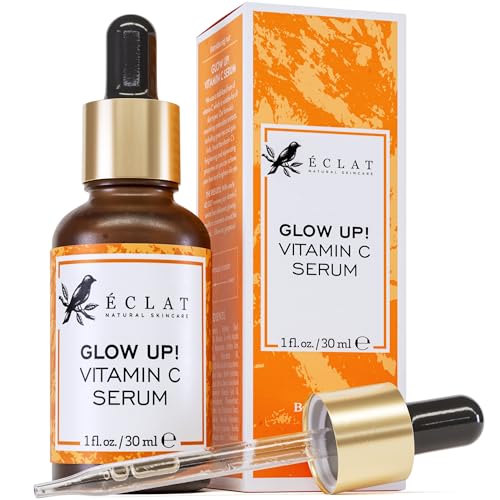 |
Eclat Vitamin C Serum with Ferulic Acid and Vitamin E | Full antioxidant ingredient stack | Addresses dark spots and aging | Competitive price for ingredient quality | View on Amazon | Read Review |
| Everyday Brightening Workhorse |  |
TruSkin Brightening Vitamin C Serum with Hyaluronic Acid | Generous 2 fl oz volume | Works across multiple skin types | Hyaluronic acid for hydration support | View on Amazon | Read Review |
| Glass Skin Glow Pick |  |
Skin 2.0 Vitamin C Serum Korean Skincare | Dermatologist-tested formulation | Cruelty-free and clean beauty certified | Korean skincare texture and layering experience | View on Amazon | Read Review |
| Tone-Evening Duo |  |
Cetaphil Vitamin C Serum with Niacinamide | Vitamin C and niacinamide combination | Trusted Cetaphil dermatologist heritage | Targets multiple causes of uneven tone | View on Amazon | Read Review |
| High-Potency Power Formula |  |
20% Vitamin C Serum with Retinol and Amino Acids | High 20% vitamin C concentration | Retinol adds cell turnover benefit | Amino acids support collagen structures | View on Amazon | Read Review |
| Clinical-Grade Precision |  |
Obagi Professional-C 15% Antioxidant Serum | 15% pure L-ascorbic acid concentration | Clinical and physician-grade brand heritage | Strong antioxidant and UV-damage-neutralizing profile | View on Amazon | Read Review |
More Details on Our Top Picks
-
Timeless Vitamin C Serum with Ferulic Acid
If you want the gold-standard vitamin C formula without the luxury price tag, Timeless delivers. It pairs L-ascorbic acid with vitamin E and ferulic acid, a trio that research consistently shows boosts antioxidant stability and efficacy. That makes it particularly well-suited to anyone who's burned through expensive serums and wants the same active chemistry for less.
The formula is fragrance-free and works for both oily and dry skin types, which is rarer than it sounds in this category. Dermatologists frequently cite this combination of actives as the benchmark for vitamin C serums, and Timeless has built its reputation almost entirely on getting that formula right.
The main limitation is packaging and shelf life. Vitamin C oxidizes quickly when exposed to light and air, so once opened, you'll want to store it carefully and use it within a few months. The 1 oz bottle keeps the commitment manageable.
- Brand:Timeless Skin Care
- Key Ingredient:L-Ascorbic Acid, Ferulic Acid, Vitamin E
- Volume:1 oz
- Skin Type:Oily and Dry
- Fragrance-Free:Yes
- Additional Feature:Antioxidant-stabilizing ferulic acid included
- Additional Feature:Suitable for both oily and dry skin
- Additional Feature:Minimalist, no-filler formulation
-
La Roche-Posay Vitamin C Serum with Salicylic Acid
La Roche-Posay takes a clever angle here by pairing vitamin C with salicylic acid, making this the go-to pick if you're dealing with both dullness and breakouts at the same time. Salicylic acid works inside the pore, while vitamin C addresses surface tone and oxidative stress. It's a combination most serums in this space don't attempt.
The brand has deep dermatologist credibility and a long track record in sensitive and reactive skin formulations. That heritage shows in the texture and tolerability. If your skin tends to revolt at new actives, this is a safer starting point than many competitors.
One honest caveat: combining two actives in one product always involves compromise. If your primary goal is maximum vitamin C brightness, a dedicated C serum may outperform it. But for oily, blemish-prone skin that wants to do more with fewer steps, this earns its spot.
- Brand:La Roche-Posay
- Key Ingredient:Vitamin C, Salicylic Acid
- Volume:1 oz
- Fragrance-Free:Yes
- Additional Feature:Salicylic acid targets clogged pores
- Additional Feature:Dermatologist-developed French pharmacy brand
- Additional Feature:Suitable for acne-prone and sensitive skin
-
CeraVe Brightening Vitamin C Serum with Hyaluronic Acid
CeraVe built its name on ceramide-based barrier support, and that philosophy carries into this vitamin C serum. The addition of hyaluronic acid means you're getting hydration alongside brightening, which is particularly useful if your skin skews dry or if you've had irritation with straight vitamin C formulas in the past.
What sets CeraVe apart in this category is the brand's commitment to dermatologist development and accessible formulation standards. You're not paying for marketing; you're paying for a formula designed with skin health as the primary brief. It's the kind of serum a dermatologist might recommend to a patient who's new to vitamin C.
The trade-off is that CeraVe tends to use more stabilized or derivative forms of vitamin C rather than pure L-ascorbic acid. These are gentler and less prone to oxidation, but may show results more gradually. Patience is part of the deal.
- Brand:CeraVe
- Key Ingredient:Vitamin C, Hyaluronic Acid, Ceramides
- Volume:1 oz
- Fragrance-Free:Yes
- Additional Feature:Ceramides support and restore skin barrier
- Additional Feature:Hyaluronic acid boosts moisture retention
- Additional Feature:Dermatologist-developed formulation
-
Vanicream Lightweight Milky Vitamin C Serum
Vanicream has spent decades earning trust among dermatologists as the brand that eliminates common chemical irritants from its formulas, and this vitamin C serum follows that same clean-ingredient philosophy. The milky, lightweight texture is a genuine point of difference in a category dominated by watery or gel-like formulas.
This is the serum to consider if fragrance, dyes, parabens, or lanolin have caused reactions for you before. Vanicream's entire brand identity is built around sensitive and reactive skin, so the formulation decisions here are unusually deliberate. It works well for those with eczema-prone or allergy-sensitive complexions.
The 1.2 fl oz size gives you slightly more product than many competitors at this tier. The limitation is that Vanicream tends to prioritize tolerability over potency, so if you want aggressive brightening results on a short timeline, a higher-concentration formula may serve you better.
- Brand:Vanicream
- Key Ingredient:Vitamin C
- Volume:1.2 fl oz
- Skin Type:Sensitive
- Fragrance-Free:Yes
- Additional Feature:Free of dyes, fragrance, and parabens
- Additional Feature:Milky texture suits dry or reactive skin
- Additional Feature:Dermatologist-recommended sensitive skin brand
-
Eclat Vitamin C Serum with Ferulic Acid and Vitamin E
Eclat assembles a full antioxidant stack, combining vitamin C with hyaluronic acid, ferulic acid, and vitamin E in a single formula. That ingredient lineup mirrors what you'd find in far pricier serums, making this one of the more compelling budget-friendly options for anyone who knows what they're looking for on an ingredient label.
The focus on dark spot correction and anti-aging is clear from the formulation. Ferulic acid stabilizes the vitamin C and amplifies its protective effect against UV-induced oxidative damage, while hyaluronic acid keeps the formula from feeling tight or dry on application.
At 1 fl oz, it's a standard size, though the brand has less name recognition than pharmacy staples like CeraVe or La Roche-Posay. That's the honest limitation here: less third-party clinical validation and fewer dermatologist citations. The ingredient list is strong, but you're relying more on the formula than the brand's track record.
- Brand:Eclat Skincare
- Key Ingredient:Vitamin C, Ferulic Acid, Vitamin E, Hyaluronic Acid
- Volume:1 fl oz
- Fragrance-Free:Yes
- Additional Feature:Ferulic acid enhances vitamin C stability
- Additional Feature:Hyaluronic acid for simultaneous hydration
- Additional Feature:Anti-aging and brightening dual focus
-
TruSkin Brightening Vitamin C Serum with Hyaluronic Acid
TruSkin takes a crowd-pleasing, broadly accessible approach to vitamin C, pairing the active with hyaluronic acid in a 2 fl oz bottle that gives you more product per purchase than most competitors in this roundup. For anyone who uses a vitamin C serum daily and goes through it quickly, that volume advantage is real.
The brightening focus is front and center, and the formula is designed to work across most skin types without requiring much adjustment. It's the kind of serum that fits easily into an existing routine rather than demanding you build around it. Think of it as a reliable mid-range option rather than a specialist tool.
The limitation is that TruSkin doesn't carry the same dermatologist endorsement density as brands like CeraVe or La Roche-Posay, and the formula isn't as clinically distinctive as options with ferulic acid or ceramides. It's solid, but it plays it safe.
- Brand:TruSkin
- Key Ingredient:Vitamin C, Hyaluronic Acid
- Volume:2 fl oz
- Fragrance-Free:Yes
- Additional Feature:Larger bottle size than most competitors
- Additional Feature:Brightening-focused formulation
- Additional Feature:Lightweight, daily-use texture
-
Skin 2.0 Vitamin C Serum Korean Skincare
Skin 2.0 leans into the Korean skincare philosophy of achieving that high-clarity, reflective complexion often called "glass skin." The formula is dermatologist-tested and cruelty-free, and the Korean skincare influence tends to mean a texture and layering experience that feels distinctly considered compared to Western drugstore alternatives.
The anti-aging and dark spot focus gives it broad appeal, and the clean beauty positioning means it avoids a number of ingredients that more cautious consumers prefer to skip. It's designed for all skin types, which keeps the barrier to entry low.
Where it has less to say is on specific active concentrations and clinical study data. The Korean skincare market is strong on sensory experience and skin-feel, and this serum reflects that, but if you want to know the exact percentage of vitamin C you're applying, the labeling may leave you wanting more detail.
- Brand:Skin 2.0
- Key Ingredient:Vitamin C
- Volume:1.69 fl oz
- Skin Type:All Skin Types
- Fragrance-Free:Yes
- Additional Feature:Inspired by Korean glass skin approach
- Additional Feature:Cruelty-free and clean beauty positioned
- Additional Feature:Anti-aging and dark spot dual benefit
-
Cetaphil Vitamin C Serum with Niacinamide
Cetaphil pairs vitamin C with niacinamide, two of the most well-researched brightening and tone-evening ingredients in skincare. Niacinamide works on hyperpigmentation through a different mechanism than vitamin C, so using them together in one formula can address uneven skin tone from multiple angles simultaneously.
The Cetaphil name carries significant dermatologist credibility, particularly for sensitive skin users. This brand is a staple recommendation in dermatology offices, and formulating a vitamin C serum under that banner signals a focus on tolerability alongside efficacy. The fragrance-free status reinforces that.
The one area to watch is that niacinamide and high-concentration L-ascorbic acid can theoretically interact if the pH balance isn't carefully managed. Cetaphil's formulation teams are experienced enough to account for this, but it's worth noting that the combination requires more formulation precision than a single-active product.
- Brand:Cetaphil
- Key Ingredient:Vitamin C, Niacinamide
- Volume:1 oz
- Fragrance-Free:Yes
- Additional Feature:Niacinamide targets dark spots independently
- Additional Feature:Dermatologist-trusted brand with sensitive skin legacy
- Additional Feature:Fragrance-free for reactive skin types
-
20% Vitamin C Serum with Retinol and Amino Acids
At 20% vitamin C, this sits at the high end of the concentration range that dermatologists typically recommend, which runs from around 10% to 20%. Pair that with retinol and amino acids, and you have a serum that's genuinely stacking multiple anti-aging mechanisms in a single product. It's ambitious by design.
The retinol addition is notable because it targets cell turnover and collagen synthesis in a way that vitamin C alone doesn't. Amino acids support the skin's structural proteins. Together, these actives make this the most ingredient-dense option in this roundup, aimed squarely at someone dealing with visible aging and wants results, not subtlety.
The honest limitation is that this combination is not for beginners or sensitive skin. High-dose vitamin C combined with retinol can cause irritation, dryness, or purging if your skin isn't already conditioned to actives. Start slowly, and don't layer it with other exfoliants.
- Key Ingredient:Vitamin C, Retinol, Hyaluronic Acid, Amino Acids
- Vitamin C %:20%
- Skin Type:Mature or Resilient Skin
- Additional Feature:Retinol targets wrinkles and cell renewal
- Additional Feature:Amino acids support skin protein structures
- Additional Feature:Collagen-boosting multi-active approach
-
Obagi Professional-C 15% Antioxidant Serum
Obagi Medical is a brand that lives in the professional and clinical skincare space, and the Professional-C serum reflects that positioning. At 15% pure L-ascorbic acid, it sits in the sweet spot that dermatologists most frequently cite as effective without being unnecessarily aggressive. The "Medical" branding here is not just marketing: Obagi has a history rooted in physician-dispensed skincare.
The antioxidant focus means this is a photoprotection and brightening tool as much as it is an anti-aging one. Used consistently alongside SPF, it helps neutralize free radical damage from UV exposure before it can translate into pigmentation or collagen degradation. Think of it as a daily shield, not just a corrector.
The clear limitation is the 0.42 oz size, which is notably smaller than every other product in this roundup. For a product at this price point and prestige level, that's a real consideration. It's positioned for those who want a clinical-grade formula and are willing to pay for it in both price and quantity.
- Brand:Obagi Medical
- Key Ingredient:L-Ascorbic Acid
- Vitamin C %:15%
- Volume:0.42 oz
- Fragrance-Free:Yes
- Additional Feature:Physician-developed professional skincare line
- Additional Feature:Antioxidant defense against UV-induced damage
- Additional Feature:Pure L-ascorbic acid formulation
Frequently Asked Questions
How long does it take to see results from a vitamin C serum?
Most people notice an improvement in skin brightness and radiance within four to six weeks of consistent daily use. Longer-term benefits, like fading dark spots and improving skin texture, typically take three to six months to become clearly visible. Consistency is the key variable here. Vitamin C works best applied every morning, as its antioxidant properties help protect your skin from UV and pollution-related damage throughout the day.
Can I use a vitamin C serum with retinol?
Yes, but the timing matters. Most dermatologists recommend using vitamin C in the morning and retinol at night to avoid potential irritation from layering two active ingredients at once. This approach also plays to each ingredient's strengths, since vitamin C's antioxidant action is most useful during daylight hours. If your skin is experienced with both ingredients and tolerates them well, some people do use them on alternate nights or in the same routine. Start cautiously and watch for redness or peeling as a sign you need to slow down.
How do I know if my vitamin C serum has oxidized?
Fresh vitamin C serums are typically clear, pale yellow, or very light gold. When a serum turns dark orange, brown, or has a noticeably unpleasant smell, that's a reliable sign it has oxidized and lost most of its potency. An oxidized serum won't cause serious harm, but it's largely ineffective and can potentially cause minor irritation. To slow oxidation, store your serum away from direct light and heat, ideally in a bathroom cabinet rather than on a sunny windowsill.
Is vitamin C serum safe to use during pregnancy?
Vitamin C is generally considered safe during pregnancy, as it's a naturally occurring antioxidant and is not absorbed systemically in the same way as ingredients like retinoids. Most dermatologists give it the green light for use throughout pregnancy and breastfeeding. That said, always check the full ingredient list of any serum, since some formulas include other actives, like niacinamide or exfoliating acids, that you may want to discuss with your OB or midwife. When in doubt, a simple formula with fewer ingredients is the safer choice.
Should I apply vitamin C serum before or after moisturizer?
Apply vitamin C serum after cleansing and any water-based toners, but before your moisturizer. As a general rule, you apply products from thinnest to thickest consistency, and most serums are lightweight enough to go on early in your routine so they can contact the skin directly. Give the serum 30 to 60 seconds to absorb before layering your moisturizer on top. Following with SPF in the morning is strongly recommended, since vitamin C and sunscreen together offer better protection against photoaging than either does on its own.